
Best starting point: accepted identity documents. Best for recording your application: the current driver licence application form. Best for checking your legal position: your court order or sentencing record. The right documents for alcohol interlock licence application depend on your sentence and NZTA’s requirements—not on how much paperwork you collect.
- Documents for alcohol interlock licence application start with identity evidence and the current driver licence application form.
- NZTA alcohol interlock licensing and District Court limited licence applications are different processes.
- Check eyesight and medical requirements before paying for supporting certificates.
- NZ Limited Licence prepares limited licence court documents, not the decision on an alcohol interlock licence.
Why this matters
An alcohol interlock licence is not another name for a limited licence or work licence. Preparing documents for the wrong process wastes effort and leaves the real licensing requirements unresolved.
NZ Limited Licence prepares limited licence applications, affidavits and complete court document bundles across all 58 District Courts in New Zealand. That service concerns the limited licence court process. It does not replace NZTA’s alcohol interlock licensing process.
For your 2026 application, establish which licence route applies before ordering documents. Start with your actual sentence and licence status, not the label someone has used for your situation.
What makes the best application documents?
The best document is the one that answers a specific requirement. A large bundle is not automatically a useful bundle.
Use these criteria:
- Correct purpose: The document belongs to alcohol interlock licensing, rather than an unrelated court application.
- Accepted format: NZTA accepts the evidence in the form you intend to present.
- Consistent identity: Your name and personal details agree across the application and supporting evidence.
- Current information: The form and any time-sensitive certificate meet the requirements applying when you submit.
- Clear legal position: Your sentence and licensing status are understood before you apply.
- Relevant support: Extra evidence addresses an actual requirement rather than adding paperwork without a purpose.
This is a practical ranking by function. It is not a claim that every applicant must submit every item below.
Alcohol interlock application documents at a glance
| Rank and document | Best for | Standout purpose | Key limitation |
|---|---|---|---|
| 1. Accepted identity documents | Establishing who is applying | Connects your identity to the licensing transaction | Not every identification document or copy is accepted |
| 2. Current driver licence application form | Recording the application | Gives the licensing agent the application details | A completed form does not establish eligibility |
| 3. Court order or sentencing record | Checking the correct legal route | Shows the sentence you need to understand | Does not itself authorise driving |
| 4. Eyesight evidence, where required | Meeting the eyesight requirement | Addresses a specific licensing check | A separate certificate is not always necessary |
| 5. Medical certificate, where required | Addressing a medical requirement | Provides relevant medical evidence | Not a universal document for every applicant |
Do not treat this table as permission to drive. Application documents, a court order and an issued licence serve different purposes.
1. Accepted identity documents: best for establishing identity
Start by checking NZTA’s official identification requirements for the transaction. Use the accepted evidence combinations rather than assuming any photo identification will do.
Compare the name on your identity evidence with the details you will put on the application. If the names differ, check what evidence NZTA requires to connect them before your licensing-agent visit.
Identity documents pros:
- Address a basic part of the licensing transaction.
- Let you identify name differences early.
- Give you a clear first check before preparing other paperwork.
Identity documents cons:
- A familiar identity document is not automatically an accepted document.
- A photocopy or certified copy is not automatically an acceptable substitute.
Best for: Applicants organising the foundation of their 2026 licensing paperwork.
Keep the original documents secure. Do not send identity documents to a document-preparation provider simply because you have them; first establish what that provider actually needs.
Verdict: Hold submission until you have checked the accepted identity requirements.
2. Current driver licence application form: best for recording details
NZTA uses the Application for issue or renewal of driver licence form, commonly called DL1, for driver licence applications. Follow the alcohol interlock programme guidance and licensing-agent instructions for your particular transaction.
Use the current form rather than copying an old completed application. Read the declarations and ask the agent about anything you do not understand before signing.
Application form pros:
- Organises the personal details needed for the application.
- Provides the relevant application declarations.
- Gives you a structured document to check against your identity evidence.
Application form cons:
- Does not prove that you are eligible for the licence.
- Does not replace identity, eyesight or medical requirements that apply.
Best for: Applicants ready to record their details accurately after confirming the correct licence route.
Check spelling, contact information and the type of transaction. An accurately completed form still needs the correct supporting evidence and licensing process.
Verdict: Wait to sign any declaration you do not understand; clarify it first.
3. Court order or sentencing record: best for checking your route
Your court paperwork helps establish what sentence was imposed. Keep it available when checking the next step with NZTA or seeking legal advice.
This is a status-checking document, not a substitute for an issued driver licence. Do not assume that every court record must be lodged with the licensing application; ask which records the agent needs from you.
Court record pros:
- Keeps the discussion tied to your actual sentence.
- Helps distinguish an interlock sentence from another disqualification.
- Gives a lawyer a concrete starting point when advice is needed.
Court record cons:
- Does not independently authorise driving.
- Does not replace the licensing agent’s application requirements.
Best for: Drivers who are unsure whether their situation involves alcohol interlock licensing or a limited licence application.
An employer’s need for you to drive does not change the sentence recorded by the court. Resolve that distinction before commissioning hardship documents.
Verdict: Hold off on buying a court application bundle until your licence route is clear.
4. Eyesight evidence: best for meeting the eyesight requirement
NZTA’s driver licensing process includes eyesight requirements. Depending on the applicable process, the eyesight check can involve screening at a licensing agent or an acceptable eyesight certificate.
Ask what applies before arranging a separate appointment. Do not assume that wearing glasses automatically means you need a separate certificate.
Eyesight evidence pros:
- Addresses a specific licensing requirement.
- Separates eyesight evidence from unrelated court paperwork.
- Gives you a clear question to resolve before attending the agent.
Eyesight evidence cons:
- A separate certificate is not necessary in every situation.
- Evidence must meet NZTA’s applicable acceptance requirements.
Best for: Applicants told they need an eyesight certificate, or checking how to meet the eyesight requirement.
For a 2026 application, check the current rules on acceptable evidence and certificate timing. Do not rely on a certificate simply because it was accepted for an earlier transaction.
Verdict: Wait for confirmation before arranging a separate eyesight certificate.
5. Medical certificate: best for a specific medical requirement
A medical certificate belongs in your paperwork when the licensing requirements call for one. It is not a general-purpose document that strengthens every application.
If NZTA or the licensing agent identifies a medical requirement, establish the correct certificate and the relevant information before booking the appointment. Tell the health practitioner what licensing transaction you are completing.
Medical certificate pros:
- Supplies medical evidence when it is required.
- Addresses health-related licensing questions directly.
- Keeps medical evidence separate from employment hardship evidence.
Medical certificate cons:
- Is not required simply because an application involves an interlock.
- Does not replace the other licensing requirements.
Best for: Applicants whose circumstances trigger a medical evidence requirement.
A character reference, employer letter or general statement about your health is not a substitute for a required medical certificate. Use the evidence specified for the actual requirement.
Verdict: Skip an unnecessary medical certificate; obtain one when the licensing requirements call for it.
Put the documents in the right process
Before assembling your 2026 paperwork, use this sequence. It separates checking your position from collecting evidence.
Confirm route
Read your sentencing paperwork and check NZTA’s alcohol interlock programme guidance. If you cannot identify the correct route, get that question resolved before preparing an application.
Check identity
Compare the accepted identification requirements with what you hold. Resolve missing evidence and name differences before presenting the application.
Complete form
Use the current application form and check every entry. Do not copy another driver’s answers or assume their circumstances match yours.
Check evidence
Confirm whether separate eyesight or medical evidence is required. Ask the licensing agent what to bring and which steps must happen in your circumstances.
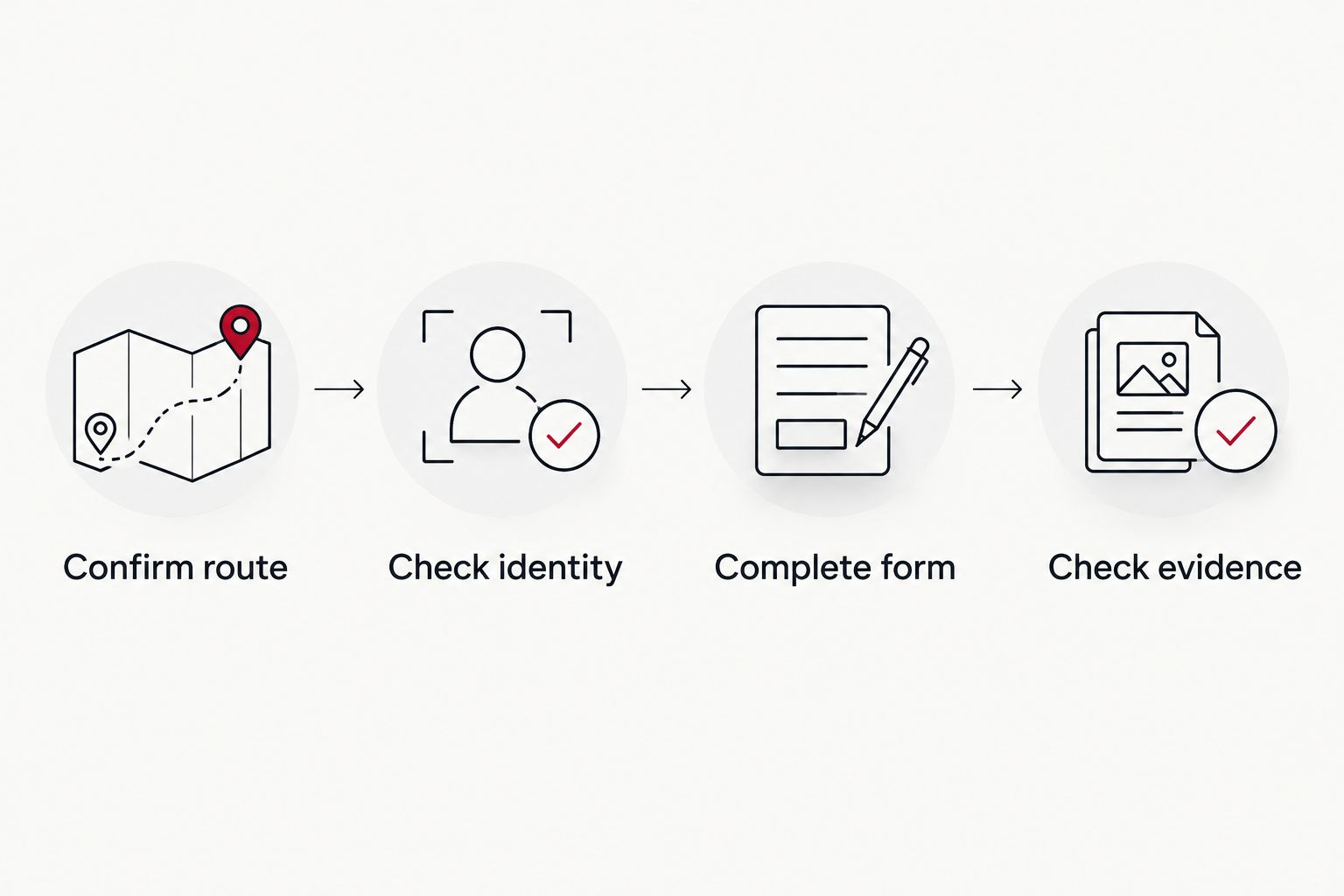
Keep your application paperwork together, but separate documents needed for submission from records you are retaining for reference. That distinction makes it easier to answer a specific request without treating every document as mandatory.
Do you need affidavits or an employer letter?
Not simply because you are applying for an alcohol interlock licence. Hardship affidavits belong to the limited licence court process, not automatically to an interlock licensing transaction.
NZTA’s official limited licence guidance identifies restrictions on eligibility, including alcohol interlock disqualifications. Do not assume a work licence application can bypass an interlock sentence.
If your actual route is a limited licence application, NZ Limited Licence prepares the application, affidavits and complete court document bundle. Preparation is fast and careful, but document preparation does not decide the application. The court makes that decision.
An employer letter should therefore follow a confirmed need for that evidence. It should not be your first purchase or your first request just because you need to return to work.
DIY, document preparation or a local lawyer?
These are 3 preparation options, not interchangeable services. Choose according to the problem you need solved.
| Option | Best for | Advantage | Limitation |
|---|---|---|---|
| Prepare documents yourself | A clearly understood application you can manage | You control the paperwork directly | You must identify the correct requirements yourself |
| Document-preparation service | An appropriate limited licence court application | Helps prepare the application and supporting bundle | Preparation does not determine eligibility or approval |
| Local lawyer | Advice about your sentence or legal options | Can address legal questions specific to your circumstances | You need to agree the scope of advice and representation |
NZ Limited Licence is best for drivers who need limited licence court documents prepared, not a substitute for NZTA alcohol interlock licensing.
Choose a lawyer when the unresolved question is what your sentence permits or which legal route is available. Choose document preparation when the route is established and you need the court paperwork prepared. DIY is a practical option when you understand the requirements and can complete them accurately.
Official sources for your 2026 checks
Use official guidance to check requirements, rather than another driver’s experience:
- NZ Transport Agency Waka Kotahi, “Alcohol interlock programme”: Programme and alcohol interlock licensing guidance.
- NZ Transport Agency Waka Kotahi, “Getting a limited licence”: Limited licence eligibility and the distinction from other licensing routes.
- NZ Transport Agency Waka Kotahi, driver licensing identification, eyesight and medical guidance: Accepted evidence for the relevant licensing transaction.
Check the versions applying when you submit in 2026. These sources serve different purposes: programme guidance explains the route; identification and health guidance explain evidence requirements.
How these documents are ranked
The ranking puts identity and the application form first because they address the licensing transaction directly. Court records help establish the route. Separate eyesight and medical certificates depend on the requirements that apply to you.
No document is ranked by its ability to secure approval. Paperwork cannot replace eligibility or change a sentence.
FAQ
What documents do I need for an alcohol interlock licence application?
Start with NZTA-accepted identity evidence and the current driver licence application form. Check the alcohol interlock programme instructions and whether separate eyesight or medical evidence is required in your circumstances.
Is an alcohol interlock licence the same as a work licence?
No. Alcohol interlock licensing and a limited licence, often called a work licence, are different processes. Check your sentence and NZTA guidance before preparing documents.
Do I need an employer affidavit for an alcohol interlock licence?
An employer affidavit is not a standard substitute for alcohol interlock licensing requirements. Hardship affidavits concern limited licence court applications, so establish the correct route first.
Should I take my court order to the licensing agent?
Ask the licensing agent which court records they need for your transaction. Keep your order available so your sentence can be identified accurately, but do not assume it replaces an issued licence.
Does every applicant need a medical certificate?
No. A medical certificate is required when the applicable licensing requirements call for one. Confirm that requirement before arranging an appointment.
Can NZ Limited Licence prepare my court documents?
NZ Limited Licence prepares limited licence applications, affidavits and complete court document bundles nationwide. That service is separate from NZTA alcohol interlock licensing and does not guarantee a court decision.
Can I drive once I have completed the application form?
No. Completing or submitting an application form does not authorise driving. You must hold the appropriate valid licence and comply with its conditions.
One last thing
The most useful question is not “What else can I add?” It is “Which requirement does this document satisfy?” If the answer is unclear, check before collecting more paperwork.
For alcohol interlock licensing, follow the NZTA route. For an appropriate limited licence court application, choose the preparation support you need. Do not mix the bundles.