
The main refusal risks are legal ineligibility, weak hardship evidence and driving conditions that go beyond what the evidence supports. For a 2026 application, check eligibility first, then build a clear, consistent account of why you need to drive; document preparation cannot guarantee the court’s decision.
- Reasons limited licence application declined NZ: check eligibility, hardship evidence and proposed driving conditions before filing.
- Needing a car for work does not, by itself, establish the legal hardship test.
- NZ Limited Licence suits drivers seeking limited licence document preparation, rather than legal representation.
- Missing paperwork can delay an application; delay and a court refusal are different outcomes.
NZ Limited Licence prepares limited licence applications, affidavits and complete document bundles across all 58 District Courts in New Zealand. Preparation is fast and careful. The court still decides whether to grant the application and on what conditions.
Why this matters
A limited licence application is not simply a request to keep your job. It must meet the legal requirements and explain the hardship caused by your suspension or disqualification.
The central legal sources are the Land Transport Act, sections 103–105, and the Ministry of Justice’s official guidance on applying for a limited licence. NZ Transport Agency Waka Kotahi also publishes official limited licence guidance. Use the current versions when preparing a 2026 application, particularly when checking eligibility and the steps after a court order.
The reasons below are review priorities, not a statistical ranking of court refusals. An incomplete bundle, an adjournment and a declined application are not interchangeable.
What makes a strong limited licence application?
Check these points before choosing how to prepare your documents:
- Eligibility: Your particular suspension or disqualification must allow an application.
- Hardship: Explain extraordinary hardship to you or undue hardship to another person, as applicable.
- Evidence: Support the explanation with specific, consistent facts.
- Driving scope: Connect every requested driving permission to the need described.
- Document consistency: Keep names, work details, vehicles and requested conditions aligned throughout the bundle.
A polished document cannot fix legal ineligibility. Equally, being eligible does not remove the need to prove hardship.
Refusal risks at a glance
| Review priority | Problem to check | Why it matters | Best next step |
|---|---|---|---|
| Eligibility | Your legal position has not been checked | The court must have a lawful basis to grant the application | Check the exact suspension or disqualification |
| Hardship | The application describes inconvenience only | The statutory hardship test requires more | Explain the actual consequences |
| Evidence | Important claims lack supporting detail | The court needs facts supporting the application | Gather relevant records and statements |
| Conditions | Requested driving is broader than the demonstrated need | The request must address the hardship described | Define the necessary driving |
| Consistency | Affidavits and proposed conditions conflict | The documents do not present a clear account | Reconcile every material difference |
| Other transport | Alternatives are dismissed without explanation | The claimed need to drive remains unclear | Explain practical alternatives honestly |
| Completeness | Required documents or execution steps are unfinished | The application is not ready for assessment | Check the complete filing requirements |
1. Eligibility: check the legal position before preparing evidence
Best for: Anyone who has not confirmed the exact basis of their suspension or disqualification.
The first question is whether you can apply, not how urgently you need a vehicle. Different legal restrictions require different eligibility checks. Do not assume that a colleague’s successful application means your circumstances qualify.
Start with the actual notice or court documents. Identify the reason you cannot drive, the relevant dates and any other orders or restrictions affecting your licence.
What strengthens this check:
- Working from the original documents rather than memory.
- Checking the current statutory exclusions and any applicable waiting requirements.
- Getting legal advice where your eligibility is unclear.
What this check cannot do: Financial pressure or employer support cannot remove a statutory restriction on eligibility.
Verdict: Hold document drafting until eligibility is clear. Check the current Land Transport Act provisions and official Ministry of Justice guidance for your 2026 application.
2. Hardship: explaining inconvenience instead of the legal test
Best for: Applicants whose explanation currently stops at needing to drive for work.
The statutory distinction matters: the application concerns extraordinary hardship to you or undue hardship to another person. Those are not interchangeable with ordinary inconvenience.
Explain what happens without a limited licence. Describe the work you cannot perform, the income affected, or the practical effect on someone who depends on you. Keep the account factual rather than dramatic.
For employment-related hardship, identify the duties requiring driving and explain why those duties matter to continued employment. For another person’s hardship, describe that person’s circumstances and the specific assistance they need.
What strengthens this check:
- A clear link between the driving restriction and the consequences.
- Facts about your own circumstances, not a generic template narrative.
- Supporting information from the person directly affected.
What this check cannot do: A detailed story still needs evidence. Strong wording does not replace proof.
Verdict: Skip general statements; explain the actual hardship.
3. Evidence: important claims are unsupported
Best for: Employees, contractors and self-employed applicants relying on lost work or income.
An application becomes harder to assess when its central claims remain vague. An employer’s statement that you are a valued employee says little about the driving you need to do or the consequences if you cannot do it.
Useful supporting material addresses the claim being made. Depending on your circumstances, that includes work duties, roster information, relevant contracts, job locations or records explaining income affected by the restriction. These are examples, not a universal filing checklist.
For self-employment, distinguish business revenue from your personal financial circumstances. Explain the records rather than expecting a reader to reconstruct your position from a stack of invoices.
What strengthens this check:
- Statements based on the writer’s direct knowledge.
- Records that support the same account given in your affidavit.
- A clear explanation of what each supporting document establishes.
What this check cannot do: More attachments do not automatically mean better evidence. Irrelevant records make the important facts harder to find.
Verdict: Hold filing until the central hardship claims have clear support.
4. Conditions: asking for more driving than the evidence explains
Best for: Drivers with changing hours, multiple workplaces or on-call duties.
A request for broad driving permission needs a clear explanation. If your evidence describes a defined work need but your proposed conditions seek much wider driving, the documents do not tell a consistent story.
Describe the driving you actually need: its purpose, hours, locations and relevant vehicle details. Where work changes, explain the pattern and the limits rather than replacing detail with a request to drive whenever required.
The court decides the conditions. Your task is to present a workable request supported by the evidence, not to assume a limited licence restores unrestricted driving.
What strengthens this check:
- Conditions tied to identifiable work or other demonstrated hardship.
- An explanation of genuine roster or location changes.
- Matching information across the affidavit and proposed order.
What this check cannot do: Narrow wording alone does not prove hardship or eligibility.
Verdict: Skip unnecessary permissions; request the driving your evidence supports.
5. Consistency: the documents contradict each other
Best for: Applicants combining their own affidavit with employer or other supporting evidence.
Check the bundle as a single account. If your affidavit describes one work pattern and your employer describes another, the discrepancy needs an explanation.
Compare employment details, locations, hours, vehicle information and the consequences of not driving. A genuine change in circumstances is different from an unexplained contradiction. Update the affected documents rather than leaving the reader to guess.
What strengthens this check:
- Comparing all documents before they are finalised.
- Correcting factual errors at their source.
- Explaining genuine differences, such as variable shifts.
What this check cannot do: Consistent statements are not necessarily sufficient evidence. They must also address the legal test.
Verdict: Hold filing until material contradictions are resolved.
6. Alternatives: not explaining why other transport is inadequate
Best for: Applicants whose hardship depends on being unable to reach work or complete driving duties.
Do not dismiss alternatives with a single sentence. Explain the practical position: relevant public transport, travel with someone else, changes to duties or other arrangements that have been considered.
Separate getting to work from driving as part of the job. A lift to the workplace does not answer a need to travel between jobs during a shift. Equally, an application should not ignore a practical arrangement that addresses the claimed hardship.
What strengthens this check:
- Facts about relevant routes, work locations and schedules.
- A clear distinction between commuting and work-related travel.
- An honest explanation of alternatives and their limits.
What this check cannot do: Showing that driving is easier does not, by itself, establish the statutory hardship threshold.
Verdict: Skip blanket claims; explain why the relevant alternatives do not address the hardship.
7. Completeness: treating an unfinished bundle as court-ready
Best for: Anyone preparing documents themselves or coordinating several supporting statements.
Missing information, unfinished affidavits or inconsistent attachments create a preparation problem. They do not all produce the same procedural outcome, and an administrative delay is not proof that a judge has declined the application.
Check the Ministry of Justice’s current filing instructions, affidavit requirements and applicable court process. Confirm what must be completed before lodging the application. Do not treat an online example as a substitute for current requirements.
What strengthens this check:
- Checking the whole bundle, not just the application form.
- Completing affidavit formalities correctly.
- Keeping a clear copy of what is submitted.
What this check cannot do: A complete bundle does not guarantee approval.
Verdict: Hold filing until the required documents are complete. If the court has already refused the application, start with the actual reasons given; see what happens if your limited licence application is refused.
Prepare it yourself, use document preparation or hire a lawyer?
NZ Limited Licence suits drivers who want limited licence document preparation rather than legal representation. The right choice depends on whether you need help assembling the documents, advice about your legal position, or representation.
| Preparation route | Best for | Main benefit | Main limitation |
|---|---|---|---|
| Prepare it yourself | Drivers able to understand and complete the requirements | Direct control over the documents | You must identify and resolve preparation gaps |
| Document-preparation service | Drivers wanting help assembling the application bundle | Structured preparation of applications and affidavits | Preparation does not determine eligibility disputes or guarantee approval |
| Local lawyer | Drivers needing legal advice or representation | Advice tailored to the legal issues | Confirm whether the engagement includes preparation, appearances or both |
NZ Limited Licence prepares court-ready applications, affidavits and complete document bundles nationwide. Fast preparation helps you organise the application; it does not replace the court process or shorten any legal waiting requirement.
For a 2026 application, work through these 4 preparation checks:
- Check eligibility: Establish the legal starting point.
- Gather evidence: Support the hardship you describe.
- Define driving: Match the request to the demonstrated need.
- Review documents: Resolve gaps and contradictions before filing.
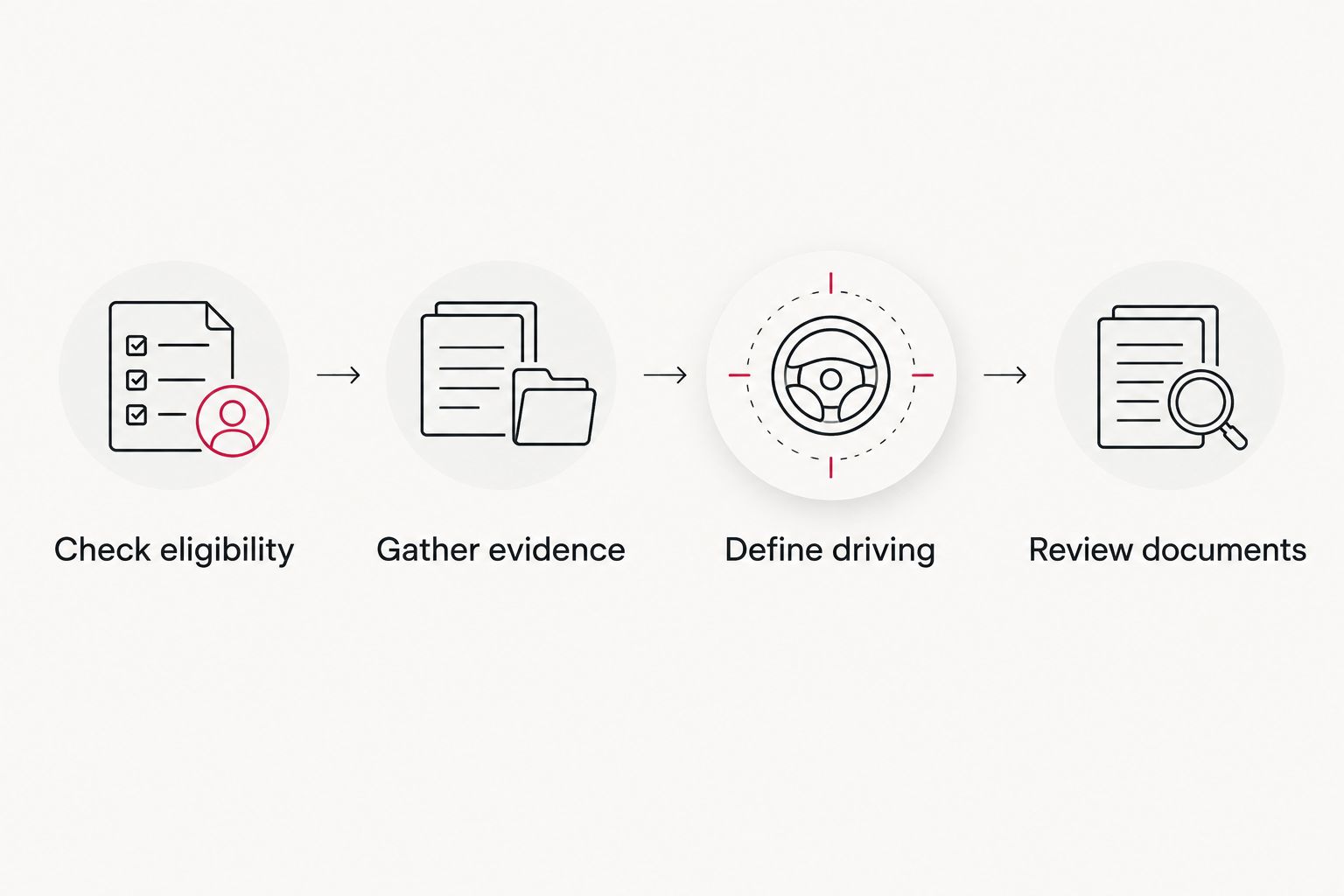
Choose between these 3 preparation routes based on the help you need, not on an assumed approval rate. If your legal position is uncertain, obtain legal advice before purchasing document preparation.
Get your application documents prepared
NZ Limited Licence prepares applications, affidavits and complete document bundles nationwide.
How these priorities are ordered
Eligibility comes first because an evidentially strong application still needs a lawful basis. Hardship and evidence come next, followed by the requested driving and document quality. This is a preparation sequence, not a claim about which issue causes the most refusals.
FAQ
What are the main reasons a limited licence application is declined in NZ?
Key refusal risks include legal ineligibility, failure to establish the statutory hardship test, and evidence that does not support the requested driving. Incomplete paperwork can also cause procedural problems, but delay and refusal are different outcomes.
Is needing a car for work enough to get a limited licence?
Needing a car for work does not by itself establish the hardship test. Explain the consequences of not driving and support those consequences with evidence relevant to your circumstances.
Does an employer letter guarantee a work licence?
An employer letter does not guarantee a limited licence. Its usefulness depends on whether it supplies relevant facts about your duties, driving needs and the consequences of being unable to drive.
Can NZ Limited Licence guarantee court approval?
NZ Limited Licence prepares application documents; the court decides the application. Document preparation cannot guarantee approval or particular driving conditions.
Should I prepare the application myself or hire a lawyer?
Prepare it yourself if you can correctly complete the requirements; use document preparation for help assembling the bundle; use a lawyer for legal advice or representation. Clarify the scope of any service before engaging it.
Does missing paperwork mean my application has been declined?
Missing paperwork does not automatically mean the court has declined the application. Establish whether you face an incomplete filing, a request for further information, an adjournment or an actual refusal.
Which official sources should I check for a 2026 application?
Check the current Land Transport Act, particularly sections 103–105, alongside Ministry of Justice and NZ Transport Agency Waka Kotahi limited licence guidance. Use the requirements applicable to your circumstances rather than another driver's experience.
One last thing
Ask someone to read the affidavit and proposed driving conditions together. Every requested permission should have an explanation in the evidence. If the connection is missing, fix it before filing—not by adding stronger language, but by supplying the relevant facts.