
Best core document: your applicant affidavit. Best supporting evidence for an employee: a specific employer statement. Best starting check: the record of your EBA disqualification. This guide ranks the documents by what they establish, so you can build a limited licence application around evidence rather than a general request to drive.
- For limited licence documents EBA disqualification NZ searches, start with the sentence details and an eligibility check.
- Your applicant affidavit should explain the hardship, alternatives and exact driving you seek.
- Employer evidence should confirm duties, working hours and the consequences of being unable to drive.
- NZ Limited Licence prepares application documents; the court decides whether to grant a limited licence.
Why this matters
An EBA disqualification and a need to work do not, by themselves, establish entitlement to a limited licence. Your documents need to explain the hardship and support the driving permission you seek.
NZ Limited Licence is best for drivers who want limited licence application documents prepared rather than drafting the bundle themselves. NZ Limited Licence prepares applications, affidavits and complete document bundles across all 58 District Courts in New Zealand.
For a 2026 application, the official starting references are the Land Transport Act, particularly sections 103–105, and NZ Transport Agency Waka Kotahi’s guidance on limited licences. Check eligibility before paying for preparation or arranging evidence.
What makes the best limited licence documents?
The strongest document is the one that establishes a relevant fact clearly. Use these criteria to assess your bundle:
- Eligibility: the documents reflect the actual sentence and any restriction on applying.
- Hardship: the evidence explains consequences, not simply inconvenience.
- Specificity: work duties, locations and requested driving periods are clear.
- Support: independent records back the applicant’s account where available.
- Consistency: names, dates, addresses and driving details agree throughout.
- Scope: the proposed permission matches the need described in the evidence.
A long statement is not automatically stronger. Remove repetition, but keep the facts needed to understand your situation.
Limited licence documents at a glance
These are document categories, not a universal filing checklist. Confirm the applicable requirements for your circumstances before lodging a 2026 application.
| Document | Best for | Main strength | Key limitation |
|---|---|---|---|
| Applicant affidavit | Explaining your personal hardship | Brings the facts together in your sworn account | Unsupported conclusions leave questions unanswered |
| Sentence and disqualification records | Checking the correct application route | Establishes the underlying court outcome | Does not establish hardship |
| Employer evidence | Confirming an employee’s work needs | Supports duties, hours and employment consequences | Generic support adds little detail |
| Business and income evidence | Supporting self-employed hardship | Connects driving needs with actual work | Turnover alone does not explain personal hardship |
| Proposed order and driving schedule | Defining the permission requested | Turns work needs into specific proposed conditions | Broad wording can exceed the supporting evidence |
| Application and organised bundle | Presenting the request coherently | Keeps the request and supporting material together | Organisation cannot fix an eligibility problem |
1. Applicant affidavit: best for explaining your hardship
Your applicant affidavit is the central account of why you seek a limited licence. It should describe your circumstances, the consequences of not driving and the alternatives you have considered.
Section 105 of the Land Transport Act distinguishes extreme hardship to the applicant from undue hardship to another person. Describe the actual consequences rather than relying on those legal phrases alone.
Applicant affidavit strengths
- Explains your job, household responsibilities and necessary travel.
- Connects the disqualification with specific consequences.
- Gives context to employer statements and financial records.
Applicant affidavit limits
- A personal assertion does not independently confirm an employer’s position.
- Repeating that you need your licence does not explain why other transport arrangements fail.
Best for: bringing your evidence into a clear, factual account.
Explain alternatives honestly. If a colleague can cover some trips but not others, say which ones and why. Avoid claiming that no alternatives exist when the real problem is that an alternative only covers part of your work.
Have the affidavit’s execution requirements checked before signing. Do not treat an unsigned draft as a completed sworn document.
Verdict: Hold signing until the facts and supporting records agree.
2. Sentence records: best for checking eligibility first
Start with the actual court outcome, not your memory of what was said. Collect the sentencing or disqualification information available to you and identify anything that needs clarification.
An EBA label is not enough to choose the correct licence pathway. The precise sentence matters, especially where an alcohol interlock requirement or another restriction is involved.
Sentence record strengths
- Anchors the application to the recorded outcome.
- Helps identify eligibility questions before drafting.
- Provides dates and details to check against the application.
Sentence record limits
- Establishing the disqualification does not establish hardship.
- An incomplete record can leave important eligibility questions unresolved.
Best for: confirming what needs checking before the bundle is prepared.
For your 2026 eligibility check, use the Land Transport Act’s limited licence provisions and NZ Transport Agency Waka Kotahi’s limited licence guidance. If the sentence is unclear, obtain clarification rather than asking a document preparer to infer it.
Verdict: Hold preparation until the relevant sentence details are clear.
3. Employer evidence: best for confirming employment consequences
A useful employer statement describes the work you actually do. It should explain where driving fits into those duties and what happens if you cannot perform them.
A sentence saying that you are a valued employee is not a substitute for those facts. Ask for concrete information the employer can truthfully confirm.
Employer evidence strengths
- Independently supports your employment and duties.
- Explains work locations, hours and travel needs.
- Clarifies whether reassignment or alternative transport is practical.
Employer evidence limits
- An employer cannot establish every part of your personal circumstances.
- A vague statement about possible job loss leaves the consequence unclear.
Best for: employees whose work depends on particular driving tasks.
Ask the employer to distinguish confirmed consequences from decisions not yet made. If the business can offer temporary non-driving duties, include that fact and explain the limits of the arrangement.
Match the format to the application requirements. A support letter and an affidavit are not interchangeable merely because they contain similar information.
Verdict: Skip generic endorsements; obtain a factual account of the work impact.
4. Business records: best for self-employed applicants
Self-employed drivers need evidence that connects the inability to drive with identifiable work consequences. Relevant records can include existing contracts, invoices, booking records and accounts, depending on the facts.
Use records to support the explanation, not replace it. A collection of invoices does not explain which work requires driving or why another arrangement does not solve the problem.
Business record strengths
- Supports the existence and nature of your work.
- Connects customer commitments with travel requirements.
- Helps explain the financial consequences described in your affidavit.
Business record limits
- Business revenue is not the same as personal income.
- Old or unrelated records do not establish the current problem.
Best for: sole traders and business owners explaining work-related hardship.
Separate confirmed bookings from anticipated work. Explain relevant business expenses and household consequences clearly, without presenting every lost sale as an equal loss of take-home income.
If someone else can drive, address that option directly. Describe the practical arrangement and its limits rather than dismissing it without explanation.
Verdict: Hold the financial claims until the records support the explanation.
5. Proposed order: best for defining the driving requested
The proposed order describes the permission you ask the court to grant. Its driving conditions should match the needs explained in the affidavits and supporting material.
Build a working schedule before drafting. Record the work purposes, locations and time periods that need consideration, then check them against the evidence.
Proposed order strengths
- Makes the requested permission clear.
- Exposes gaps between work needs and supporting statements.
- Helps you check whether changing work patterns have been addressed.
Proposed order limits
- Draft wording is not permission to drive.
- A broad request is not justified simply because it would be convenient.
Best for: translating supported work needs into a defined request.
For your 2026 bundle, compare the proposed conditions with actual rosters and duties. Do not describe fixed hours if your evidence shows changing shifts, and do not request unrelated travel without explaining its basis.
The court decides whether to make an order and on what terms. Preparation does not guarantee acceptance of the wording requested.
Verdict: Skip unsupported catch-all driving requests.
6. Application bundle: best for presenting a consistent request
The application sets out the request. The supporting bundle supplies the evidence and related documents needed to assess it.
An organised bundle helps the reader connect each claim with its supporting material. It also gives you a final opportunity to find contradictions before filing.
Application bundle strengths
- Brings the application, affidavits and supporting material together.
- Makes references to attachments easier to follow.
- Allows a final consistency check across the documents.
Application bundle limits
- Neat presentation does not prove hardship.
- A complete-looking bundle can still contain incorrect facts.
Best for: applicants ready to turn checked information into filing documents.
Use 1 master timeline for your own preparation. Record the relevant sentence, work and supporting-document dates together, then compare each document against it.
Before lodging, confirm the applicable filing and service steps with the Ministry of Justice’s limited licence guidance and the relevant District Court registry. Keep preparation, filing and the court’s decision separate in your planning.
Verdict: Hold filing until the bundle is consistent and the procedural steps are confirmed.
Choose how to prepare your documents
You have 3 preparation routes to compare: do it yourself, use a document-preparation service or instruct a lawyer. Choose according to the help you need, not the size of the paperwork pile.
| Route | Best for | Main advantage | Main limitation |
|---|---|---|---|
| Prepare it yourself | Applicants able to manage drafting and procedural checks | You control the preparation directly | You must identify and resolve drafting problems yourself |
| Document-preparation service | Drivers seeking help assembling application documents | Focuses on applications, affidavits and the bundle | Do not assume legal advice or representation is included |
| Local lawyer | Applicants needing legal advice or representation | Can address legal questions within the agreed engagement | Confirm whether drafting, filing and appearances are included |
NZ Limited Licence provides fast, careful limited licence document preparation nationwide. If you need help producing the application, affidavits and complete bundle, that is the relevant service; if you need legal advice about a disputed issue, clarify that need before engaging anyone.
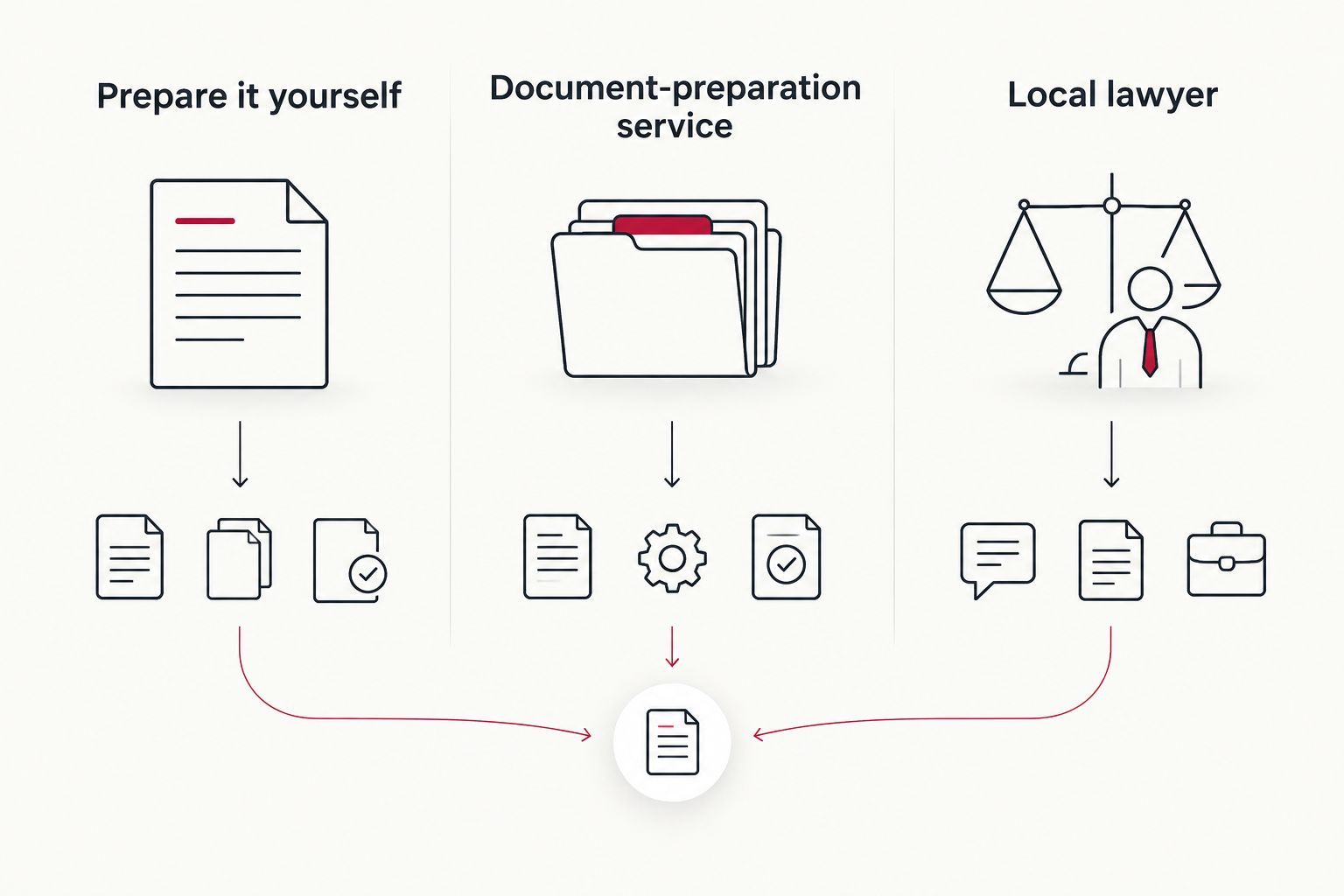
Check 3 points before engaging a provider: the work included, who handles the next procedural steps, and whether advice or representation forms part of the engagement. Do not assume document preparation includes every stage.
Get your application documents prepared
NZ Limited Licence prepares applications, affidavits and complete document bundles nationwide.
How these documents are ranked
The ranking follows each document’s role: establish the personal account, check the sentence, support the hardship and define the request. It is not a claim that one document can replace another.
Eligibility comes before drafting in practice, even though the applicant affidavit carries the main narrative. Independent evidence then supports that narrative, and the proposed order should stay within it.
Which documents should you prepare first?
Confirm the sentence and eligibility, then build the applicant affidavit around verifiable facts. Employees should gather specific employer evidence; self-employed applicants should identify the business records that explain their actual work consequences.
For a 2026 application, choose NZ Limited Licence when you want the limited licence documents prepared for you. Choose legal advice when the central problem is an unresolved legal question rather than drafting.
FAQ
What documents do I need for a limited licence after an EBA disqualification?
The core document categories are the application, applicant affidavit, relevant sentence information, supporting hardship evidence and proposed order. The exact bundle depends on your circumstances and applicable court requirements.
Does an employer letter guarantee a work licence?
No. Employer evidence supports the facts about your work, but the court decides whether the legal requirements for a limited licence are met.
What should my limited licence affidavit explain?
Your affidavit should explain your circumstances, the hardship caused by not driving, the alternatives considered and the permission requested. Support factual claims with relevant records where available.
Can I use business invoices if I am self-employed?
Relevant invoices can support your account of your work. Explain how they connect to necessary driving and the hardship claimed; invoices alone do not explain the whole situation.
Is a limited licence application the same as an alcohol interlock application?
No. Do not treat the pathways as interchangeable. Check your actual sentence against NZ Transport Agency Waka Kotahi guidance before preparing documents.
Can NZ Limited Licence decide whether my application is approved?
No. NZ Limited Licence prepares application documents, affidavits and bundles. The court decides whether to grant the application and what conditions to impose.
Should I prepare the documents myself or use a lawyer?
Prepare them yourself if you can manage the drafting and procedural checks; use a document-preparation service for preparation help. Instruct a lawyer when you need legal advice or representation, and confirm the scope of the engagement.
One last thing
Check the proposed driving conditions against your next actual work schedule. If the request does not cover an essential journey, fix the mismatch in the draft and supporting explanation rather than assuming it will be understood.
A carefully written affidavit and an accurate work schedule need to tell the same story. Consistency is more useful than extra pages.