
Best starting point: a current application and affidavit. Best after a refusal: the earlier decision and evidence addressing its reasons. Best for proving work needs: specific employer or business records. The right documents for reapplying for a limited licence in NZ depend on why you are applying again—not simply what you submitted last time.
- Documents for reapplying for a limited licence NZ should explain your current circumstances, not repeat an outdated bundle.
- NZ Limited Licence prepares limited licence applications, affidavits and document bundles; the court decides whether to grant them.
- After a refusal, connect each relevant concern to a clear explanation and supporting evidence.
- Check whether you need a fresh application, different conditions or another legal step before preparing documents.
Why this matters
A previous application gives you a starting point. It does not establish your present position. Your employment, driving needs, suspension or disqualification details, and supporting evidence need to tell the same story.
NZ Limited Licence is best for drivers who want limited licence application documents prepared rather than drafting the bundle themselves. NZ Limited Licence prepares applications, affidavits and complete document bundles nationwide, across all 58 District Courts.
For a 2026 application, separate document preparation from legal eligibility. The Land Transport Act, sections 103–105, provides the statutory framework for limited licences. Check the current provisions through NZ Legislation and the current procedural guidance from the Ministry of Justice before filing.
An application involving a previous refusal also deserves attention to the earlier decision. More paperwork is not a substitute for addressing the issue that matters.
What makes the best reapplication documents?
The most useful document answers a specific question. Use these criteria to decide what belongs in your bundle:
- Current: It describes your circumstances now, including changed employment or driving needs.
- Relevant: It supports the application you are actually making.
- Specific: It identifies duties, locations, hours and consequences instead of making general statements.
- Consistent: Names, dates and proposed driving details agree across the bundle.
- Responsive: It addresses relevant concerns raised in an earlier decision.
- Traceable: The reader can identify who supplied the information and what it supports.
These criteria rank usefulness, not legal importance. A document lower on the list can become central when it addresses the reason your earlier application failed.
Reapplication documents at a glance
| Document or evidence | Best for | Standout contribution | Key limitation |
|---|---|---|---|
| Current application and affidavit | Explaining your present case | Brings the request and supporting facts together | Reused wording can preserve outdated facts |
| Earlier decision and application | Responding after a refusal | Identifies what needs attention | Does not prove your circumstances have changed |
| Employer evidence | Explaining employed driving needs | Connects driving to actual duties | A generic support letter adds little detail |
| Business and income records | Supporting self-employed work needs | Shows the work behind your account | Unexplained records leave the reader guessing |
| Suspension or disqualification records | Establishing the starting position | Identifies the restriction you are dealing with | Does not establish eligibility by itself |
| Proposed driving schedule and supporting details | Defining the driving requested | Makes hours, routes and work needs easier to compare | A schedule cannot replace hardship evidence |
1. Current application and affidavit: best for explaining your case
Your current application and affidavit should explain what you are asking for and the facts supporting that request. Treat the previous version as reference material, not a document to resubmit unchanged.
For a 2026 reapplication, review every factual statement. Check employment, addresses, work patterns and the consequences of being unable to drive. Explain relevant changes plainly, without overstating what the evidence proves.
The Land Transport Act, section 105, addresses extreme hardship to the applicant or undue hardship to another person. Difficulty travelling to work needs a factual explanation; the legal test is not satisfied simply by describing driving as convenient.
Current application and affidavit strengths:
- Provides a clear account of your present circumstances.
- Connects supporting evidence to the request.
- Makes relevant changes explicit.
Current application and affidavit limitations:
- Unsupported statements remain unsupported.
- Old wording can conflict with new attachments.
Best for: Every driver preparing a fresh account of their circumstances.
Verdict: Use a current draft. Skip automatic resubmission.
2. Earlier decision and application: best after a refusal
Keep the earlier decision with the application and evidence the court considered. Read them together. This helps distinguish a concern about the evidence from a question about eligibility or the legal route available.
Create a working list of the relevant concerns. Against each concern, identify the explanation or document that addresses it. Do not assume a different-looking bundle resolves the underlying issue.
If the meaning or effect of the decision is unclear, take it to a lawyer before preparing another application. The guide to what happens if your limited licence application is refused provides related reading.
Earlier decision and application strengths:
- Preserves the reasons given for the outcome.
- Shows what evidence was previously presented.
- Helps focus further preparation.
Earlier decision and application limitations:
- Historical documents do not establish current facts.
- Understanding the next legal step can require legal advice.
Best for: Drivers applying again following an unsuccessful application.
Verdict: Use the decision as a preparation checklist, not proof that reapplying is available.
3. Employer evidence: best for explaining employed driving needs
Ask your employer to explain the work, not just support your application. Useful evidence identifies your role, where you work, when you work and which duties involve driving.
Separate commuting from driving during work. They are different practical needs. If your employer describes consequences for your employment, those statements should reflect the actual position—not language suggested merely to strengthen the application.
Check the employer's account against your affidavit. A fixed-hours letter beside a rotating-shift schedule creates an avoidable question. Resolve the difference before submitting either document.
Employer evidence strengths:
- Adds information from someone with direct knowledge of your work.
- Explains duties in practical terms.
- Helps support the driving schedule requested.
Employer evidence limitations:
- General praise does not explain hardship.
- An employer cannot determine whether the court will grant a licence.
Best for: Employees whose case depends on commuting or work-related driving.
Verdict: Use specific, accurate employer evidence. Skip a generic character reference as a substitute.
4. Business and income records: best for self-employed drivers
Self-employed drivers need to make the work understandable without relying on an employer's explanation. Relevant contracts, job bookings, invoices and business records can support the account in your affidavit.
Explain what each selected record shows. A booking might support a work location; an invoice might show the type of work undertaken. Neither automatically proves that you personally must drive there.
Describe practical alternatives accurately. Explain why rearranging work, using another driver or changing transport arrangements does or does not address the problem. Keep the focus on your actual circumstances.
Business and income records strengths:
- Supports your account with existing records.
- Shows the connection between work and travel.
- Helps explain variable jobs or locations.
Business and income records limitations:
- Revenue alone does not explain hardship.
- Large, unexplained attachments obscure the relevant facts.
Best for: Sole traders, contractors and business owners explaining their own work needs.
Verdict: Use selected records with explanations. Skip the unsorted paperwork dump.
5. Restriction records: best for checking your starting position
Keep the relevant suspension notice, disqualification order or other official record available when obtaining preparation help or legal advice. These records identify the restriction your proposed application concerns.
For a 2026 check, use current NZTA guidance alongside the Land Transport Act provisions on limited licences. Do not treat a demerit suspension, court disqualification and alcohol interlock requirement as interchangeable situations.
If the documents appear inconsistent, clarify the position before drafting around an assumption. The date you remember is not a substitute for the record itself.
Restriction record strengths:
- Identifies the restriction being addressed.
- Provides a basis for checking relevant dates.
- Helps a preparer or lawyer understand the background.
Restriction record limitations:
- Possessing the record does not establish eligibility.
- Earlier paperwork might not describe your complete current position.
Best for: Drivers checking which restriction and circumstances their application must address.
Verdict: Use the official records. Skip estimates from memory.
6. Proposed driving details: best for making the request clear
Prepare a working schedule of the driving you want the application to cover. Describe the days, hours, destinations and work purposes accurately. Include vehicle information where it is relevant to the request.
For variable work, explain the variation instead of inventing a fixed pattern. An on-call arrangement needs an explanation that matches the employer or business evidence.
This is a drafting aid, not permission to drive. The eventual court order and licensing requirements determine what you can lawfully do; your proposed schedule does not.
Proposed driving detail strengths:
- Makes the request easier to understand.
- Exposes gaps between work evidence and requested driving.
- Helps identify unnecessary or unexplained journeys.
Proposed driving detail limitations:
- A detailed schedule does not prove hardship.
- Overly broad requests still need factual support.
Best for: Shift workers, mobile workers and drivers with several work locations.
Verdict: Use a realistic schedule. Skip requests broader than your evidence supports.
How these documents are ranked
The order starts with the documents that explain the application, then moves to evidence supporting particular circumstances. Current facts, relevance and consistency take priority over bundle size.
This is not a universal filing checklist. The current Ministry of Justice guidance, applicable law and circumstances of your application determine the procedural requirements. A supporting record useful for preparation is not automatically a required court attachment.
Which preparation route should you choose?
Choose the route that matches the problem you need solved. Document preparation and advice about a disputed legal issue are different needs.
| Route | Best for | Main benefit | Main limitation |
|---|---|---|---|
| Prepare documents yourself | Drivers able to follow current requirements | Direct control over the drafting | You must resolve drafting and procedural questions yourself |
| NZ Limited Licence | Drivers wanting application document preparation | Fast, careful preparation of applications, affidavits and bundles | Preparation does not determine eligibility or court approval |
| Local lawyer | Drivers needing advice on eligibility, refusal or disputed issues | Advice about the legal issue and appropriate next step | The agreed scope still needs to be clear |
Before choosing a provider in 2026, ask what the service includes. Confirm who handles document preparation, procedural questions and any legal advice your circumstances require.
Get your documents prepared
Arrange fast, careful preparation of your limited licence application, affidavits and document bundle.
Put the bundle together without carrying errors forward
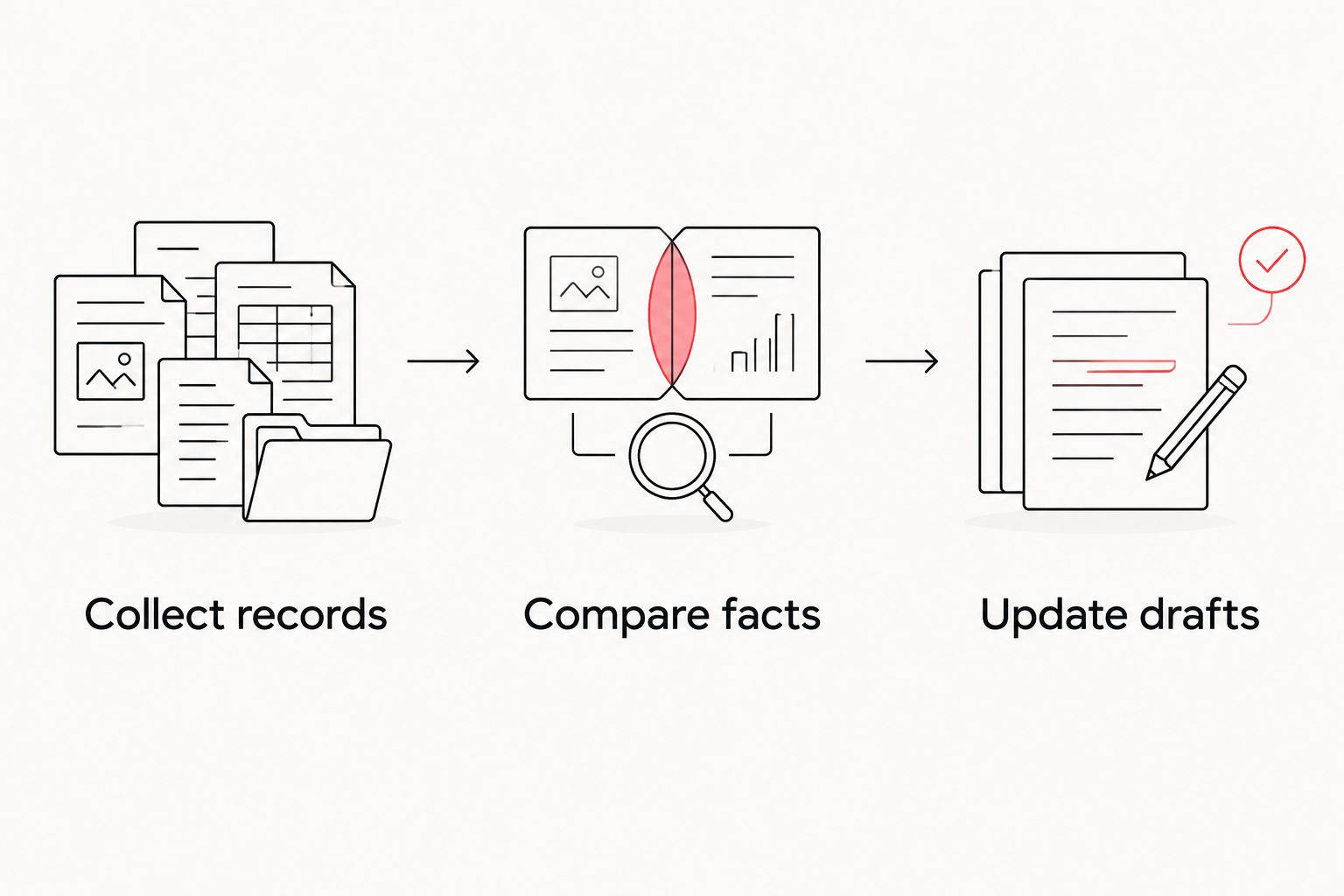
Use this preparation sequence before finalising documents:
- Collect records: Gather your restriction records, earlier application, decision and current supporting evidence.
- Compare facts: Check names, dates, work details and proposed driving across every document.
- Update drafts: Resolve inconsistencies and explain relevant changes before signing or filing.
The sequence keeps the earlier paperwork useful without allowing it to dictate your current account. Keep a clear distinction between an old document and its replacement.
FAQ
What documents do I need when reapplying for a limited licence in NZ?
Start with a current application and affidavit, relevant restriction records and evidence supporting your circumstances. If an earlier application was refused, include the decision in the material you give your preparer or lawyer. Confirm the filing requirements for your situation.
Can I reuse my old limited licence affidavit?
Use the old affidavit as reference material, not an automatically current account. Check every statement against your circumstances now and obtain guidance on the correct way to finalise the replacement.
What should I do differently after my application was refused?
Start with the reasons in the earlier decision. Identify the relevant issues and obtain legal advice where the decision raises questions about eligibility or the next available step.
Is an employer letter enough for a limited licence application?
An employer letter is supporting evidence, not a replacement for the application and affidavit. Its value comes from accurate details about duties, hours, locations and the consequences of being unable to drive.
What records help if I am self-employed?
Relevant contracts, bookings, invoices and business records can support your explanation of work needs. Explain what each record proves and why the work requires the driving requested.
Should I use a lawyer or a document-preparation service?
Choose a document-preparation service when you need help preparing the application paperwork. Choose a lawyer when you need advice about eligibility, an earlier refusal or a disputed legal issue.
Does paying for document preparation guarantee a limited licence?
No. NZ Limited Licence prepares limited licence documents; the court decides the application. Document preparation is not permission to drive.
One last thing
Check contradictions before adding more evidence. An employer letter describing one work pattern and an affidavit describing another leave an unanswered question, even when both documents look complete.
Read the finished bundle as a single account. Every attachment should support that account or have a clear explanation for the difference.