
A Police objection does not automatically defeat your limited licence application: the court decides whether to grant it. Get the objection in writing, identify exactly what Police dispute, and respond with evidence or narrower driving conditions. If Police challenge your eligibility, the legal grounds or your evidence, get legal advice before the hearing; document preparation is not representation in court.
- A limited licence application police objection is not a court refusal; the judge decides the application.
- Answer the stated concern with evidence, not a general claim that you need a work licence.
- NZ Limited Licence prepares application documents; a contested hearing can require advice and representation from a lawyer.
- Do not drive merely because you have applied or reached agreement with Police.
What if Police object to your limited licence application?
Treat the objection as an issue to answer, not a decision already made. The limited licence test comes from section 103 of the Land Transport Act 1998. It includes extreme hardship to you or undue hardship to another person, and the court must be satisfied that granting the application would not be contrary to public safety.
For a 2026 application, read that legal test alongside NZ Transport Agency Waka Kotahi's official guidance, Limited licences. Police agreement and court approval are different things. Neither a convincing employer letter nor an urgent work problem removes the need to meet the legal requirements.
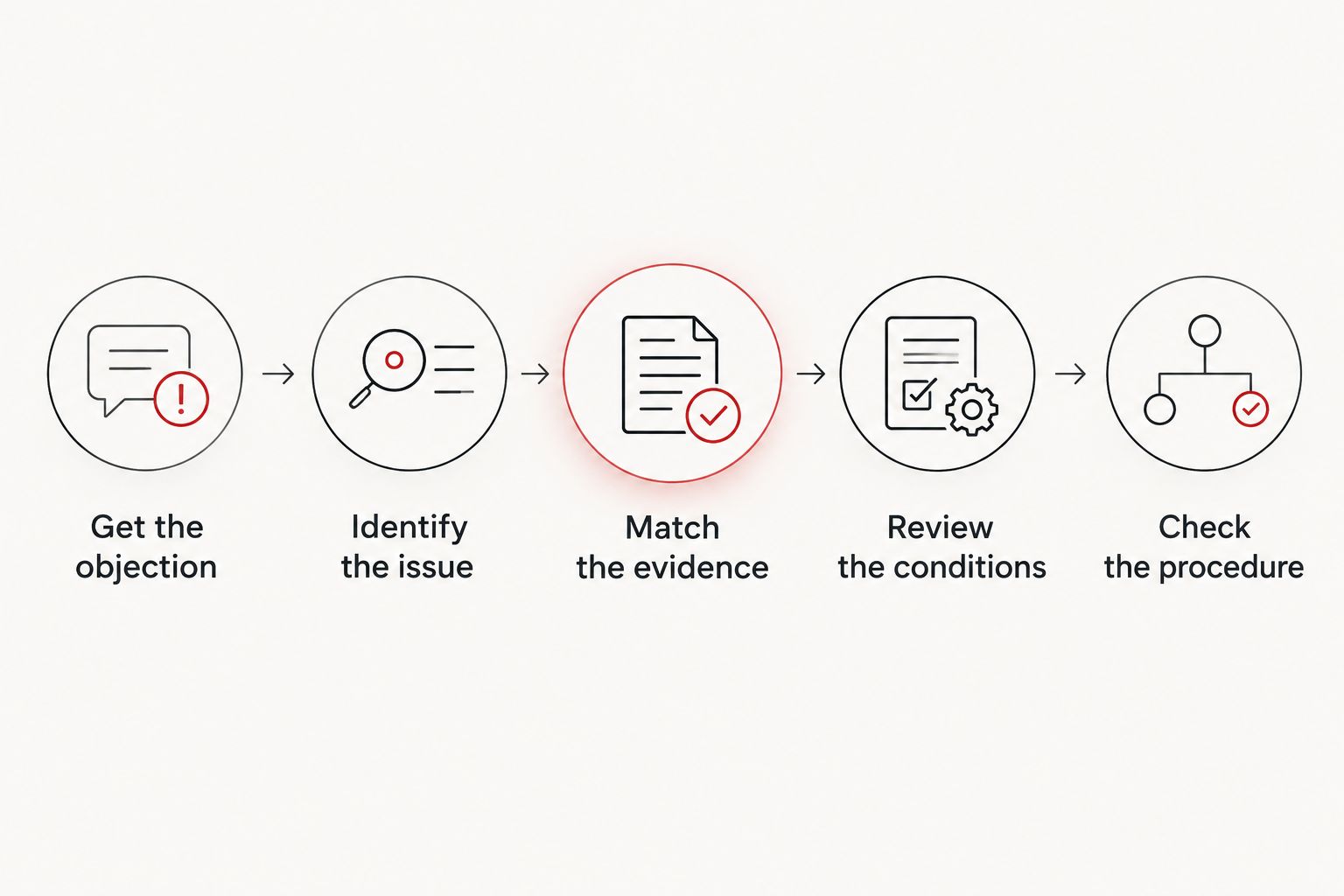
Work through the objection in this order:
- Get the objection. Ask for the actual grounds, rather than relying on a summary passed on by someone else.
- Identify the issue. Separate eligibility questions from disputed facts, hardship evidence and proposed driving conditions.
- Match the evidence. Identify the document or explanation that answers each concern. Check the application bundle guide before adding more paperwork.
- Review the conditions. Check whether the driving you request is wider than the need your evidence establishes.
- Check the procedure. Ask the court registry how additional material should be filed and supplied to the other parties. Seek legal advice on any contested legal issue.
Keep the written objection with your application documents. You need to know what remains disputed, what you have corrected and what the judge will be asked to decide.
Why this matters
A limited licence is permission to drive under specified conditions, not a general return to driving. An application therefore needs to explain both the hardship and the driving needed to address it.
A Police objection can expose a gap between those two things. Your evidence might describe particular work journeys while your proposed conditions request much broader driving. Adding more words about needing your job does not fix that mismatch.
Make the evidence and requested conditions tell the same story. That gives the court a clearer application to assess, without pretending that better paperwork guarantees approval.
If Police question your eligibility
An eligibility objection needs a legal answer. It is different from a missing attachment or an unclear work schedule.
Start with the exact suspension or disqualification you face. Keep the relevant notice or court order available, including its dates and the basis for it. Do not assume that advice given to someone facing a demerit suspension also applies to your drink-driving disqualification.
For eligibility in 2026, use NZTA's Limited licences guidance and the current Land Transport Act provisions. If Police say a statutory restriction prevents your application, ask a lawyer to assess that specific restriction. A stronger hardship statement cannot overcome legal ineligibility.
Avoid arguing from another driver's outcome. Their offence, history, sentence and proposed conditions are not evidence that your application meets the same requirements.
If Police question your hardship evidence
The legal test is not simply that losing your licence makes life difficult. Section 103 of the Land Transport Act 1998 distinguishes extreme hardship to the applicant from undue hardship to another person.
Explain what actually happens without the driving you request. For employment, that means describing your duties, the journeys those duties require and why the proposed alternatives do not solve the problem. For someone else's hardship, identify the person affected and explain the practical consequences for them.
Use evidence that fits the claim:
- An employer statement should explain the relevant duties, not just say you are a valued employee.
- A work schedule should support the driving hours you request.
- Business records should support claims about self-employed work or lost income.
- Evidence about another person's needs should explain why your driving matters to that person.
- Information about transport alternatives should address the actual journeys, not transport in general.
These are practical evidence examples, not a universal list of mandatory attachments. Choose documents that prove the disputed point. A large bundle with no clear connection to the objection is harder to follow than a focused response.
Check every added statement against the existing application. If your hours, duties or circumstances have changed, explain the change rather than leaving contradictory accounts in the bundle.
If Police question your driving conditions
Read the proposed conditions as restrictions someone must understand and follow. Compare them with the journeys your evidence describes.
Where Police object to the scope of driving, ask which part is disputed: the purpose, hours, area, journeys or vehicle arrangements. Do not assume every concern requires abandoning the application. Equally, do not offer a restriction you cannot realistically follow.
A useful review asks:
- Does every requested journey have a stated purpose?
- Do the driving hours match the supporting work information?
- Is the requested area explained by the journeys involved?
- Are any variable hours or locations explained clearly?
- Does the proposal include driving unrelated to the hardship claim?
Discuss revised conditions with your lawyer where the objection remains contested. Narrower conditions can answer a scope concern, but they do not settle a separate eligibility or public-safety issue.
For a 2026 application, avoid copying another person's conditions without checking your own circumstances. A familiar-looking template is not proof that the wording fits your work or the legal test.
Why Police objections need different responses
The right response depends on what is disputed. Sending the same extra employer letter for every objection wastes effort and can leave the main issue untouched.
- Eligibility: Check the legal restriction Police identify. More hardship evidence is not a substitute for eligibility.
- Hardship: Explain the consequences and provide evidence tied to those consequences.
- Inconsistent facts: Resolve differences between the application, affidavit and supporting documents.
- Driving scope: Match the proposed conditions to the journeys you can justify.
- Public safety: Obtain legal advice on the concern and how it affects the statutory test.
Keep these categories separate when you prepare your response. Police can raise more than one issue, so answering one point does not mean every objection has been resolved.
Should you prepare the response yourself or use professional help?
Choose help according to the problem. Preparing documents and arguing a contested legal issue are different tasks.
| Option | Best for | Practical advantage | Limit to consider |
|---|---|---|---|
| Prepare documents yourself | Drivers able to understand the requirements and organise their evidence | You control the drafting and know the underlying facts | You must identify gaps, check consistency and manage the filing requirements yourself |
| Use document preparation | Drivers who need an application, affidavits and a document bundle prepared | The service focuses on organising the court documents | Preparation does not replace legal advice or representation in a contested hearing |
| Hire a local lawyer | Drivers facing disputed eligibility, legal arguments or a contested hearing | A lawyer can advise on the dispute and, when engaged to do so, represent you | Confirm what the engagement includes; document drafting and hearing attendance are separate tasks |
NZ Limited Licence is best for drivers who need limited licence application documents prepared, rather than representation in a contested hearing. The service prepares applications, affidavits and document bundles across all 58 District Courts in New Zealand, with fast, careful preparation.
That service addresses the paperwork. The court still decides the application, and a Police objection can require a lawyer's advice beyond document preparation. Before engaging anyone, explain that Police have objected and provide the objection itself.
Get your application documents prepared
NZ Limited Licence prepares applications, affidavits and document bundles nationwide.
Can you still get a limited licence if Police object?
Yes, a Police objection does not itself decide your limited licence application. The court must assess the application against the legal requirements.
That is not a prediction of success. Answering Police's concerns helps the court understand your position; it does not remove the judge's responsibility to consider hardship, eligibility and public safety.
What if Police agree after you change the documents?
Police agreement does not grant a limited licence. The court must still decide the application, and you must complete the required licensing steps before driving.
Keep the final proposed conditions consistent across the documents. If agreement relates to a revised version, make sure you understand which version will be put before the court.
Can you drive while the objection is being sorted out?
No. A pending limited licence application does not give you permission to drive while your suspension or disqualification applies.
NZTA's Limited licences guidance explains the distinction between obtaining a court order and obtaining the limited licence. Check the required steps and commencement restrictions that apply to you; do not treat an encouraging conversation as authority to drive.
Before the hearing: check the final bundle
Use the written objection as your final checking list. Against each point, identify your response and the document supporting it. If a point has no answer, do not hide it under unrelated attachments.
Then check the basics:
- Names, dates and factual descriptions agree across the documents.
- The affidavit supports the hardship claimed in the application.
- Employer or other supporting statements match the requested conditions.
- Changes are explained rather than silently substituted.
- Additional documents follow the registry's filing instructions.
- You know which issues remain contested.
For a hearing in 2026, confirm procedural arrangements with the relevant District Court registry. The Ministry of Justice's official District Court information is the starting point for court administration; a lawyer is the appropriate source of advice about how to argue a contested application.
FAQ
Does a Police objection mean my limited licence application is refused?
No. A Police objection is not a court refusal; the court decides whether your application meets the legal requirements. Get the grounds in writing so you can address the actual dispute.
Do Police have to agree before the judge can consider my application?
Police agreement is not the statutory hardship and public-safety test. Section 103 of the Land Transport Act 1998 sets the court's decision-making requirements; seek legal advice if Police contest your application.
What should I send when Police say my hardship evidence is weak?
Send evidence that answers the specific weakness identified. Explain the consequences of being unable to drive and support those claims with relevant work, business or other hardship evidence.
Can I change the driving hours in my application?
You can propose revised driving hours, but they must fit the need your evidence explains. Check how to submit revised documents with the court registry and obtain advice where the conditions remain disputed.
Do I need a lawyer if Police object?
A lawyer is the appropriate choice when the objection involves disputed eligibility, legal arguments or representation at a contested hearing. A document-preparation service focuses on the application paperwork, not arguing your case in court.
Can NZ Limited Licence help with my court documents?
NZ Limited Licence prepares limited licence applications, affidavits and document bundles nationwide. Provide the Police objection when discussing preparation; the service does not determine whether the court will approve your application.
Can I drive once Police withdraw their objection?
No. Withdrawal of an objection is not a limited licence. You need the court's decision and completion of the required licensing steps before driving under the authorised conditions.
Where should I check the rules for a 2026 application?
Check NZTA's official Limited licences guidance and the current Land Transport Act provisions for a 2026 application. Confirm filing arrangements with the relevant District Court registry and get legal advice on disputed legal issues.
One last thing
Do not respond to an objection by making the application bigger. Make the answer clearer. Put the disputed point beside the evidence that addresses it, then check whether your requested conditions match.
If the problem is legal eligibility, get legal advice. If the problem is incomplete or inconsistent paperwork, fix the documents. Knowing the difference prevents you from paying for the wrong kind of help.