
Describe your limited licence application routes by naming where each necessary work journey starts and ends, the roads or area you need, and the work reason for travelling. Match those journeys to the driving hours you request and the evidence supporting your application. Separate a fixed commute from travel between changing work sites, and do not treat a proposed route as permission to drive.
- Limited licence application routes should identify necessary journeys, destinations and clear boundaries, not unrestricted travel.
- NZ Limited Licence suits drivers seeking preparation of work licence applications, affidavits and court document bundles.
- Changing work sites need a clear explanation of the work area and supporting employment evidence.
- The court decides the application; document preparation does not authorise driving.
Why this matters
A route description connects your driving request to the hardship you are explaining. A list of roads alone does not explain why you need to drive. A statement that you need transport for work does not explain where that driving would take place.
Describe the journey and its purpose together. That gives the reader of your application a practical picture of the permission you are requesting.
NZ Limited Licence prepares limited licence applications, affidavits and complete document bundles across all 58 District Courts in New Zealand. Preparation is separate from the court's decision, and a carefully written route description is not a promise of approval.
For a 2026 application, use current official guidance rather than copying another driver's conditions. NZ Transport Agency Waka Kotahi's limited licence guidance covers the application process. The Land Transport Act 1998, section 105, sets out the court's power to authorise a limited licence and impose conditions. Neither source makes another person's route wording suitable for your circumstances.
Limited licence application: how do you describe work routes?
Build the description from your actual work journeys. Start with the destinations, then explain the route or geographical boundary, the purpose of travel and how it fits your requested hours.
These are drafting steps, not a substitute for checking eligibility or obtaining advice about your case.
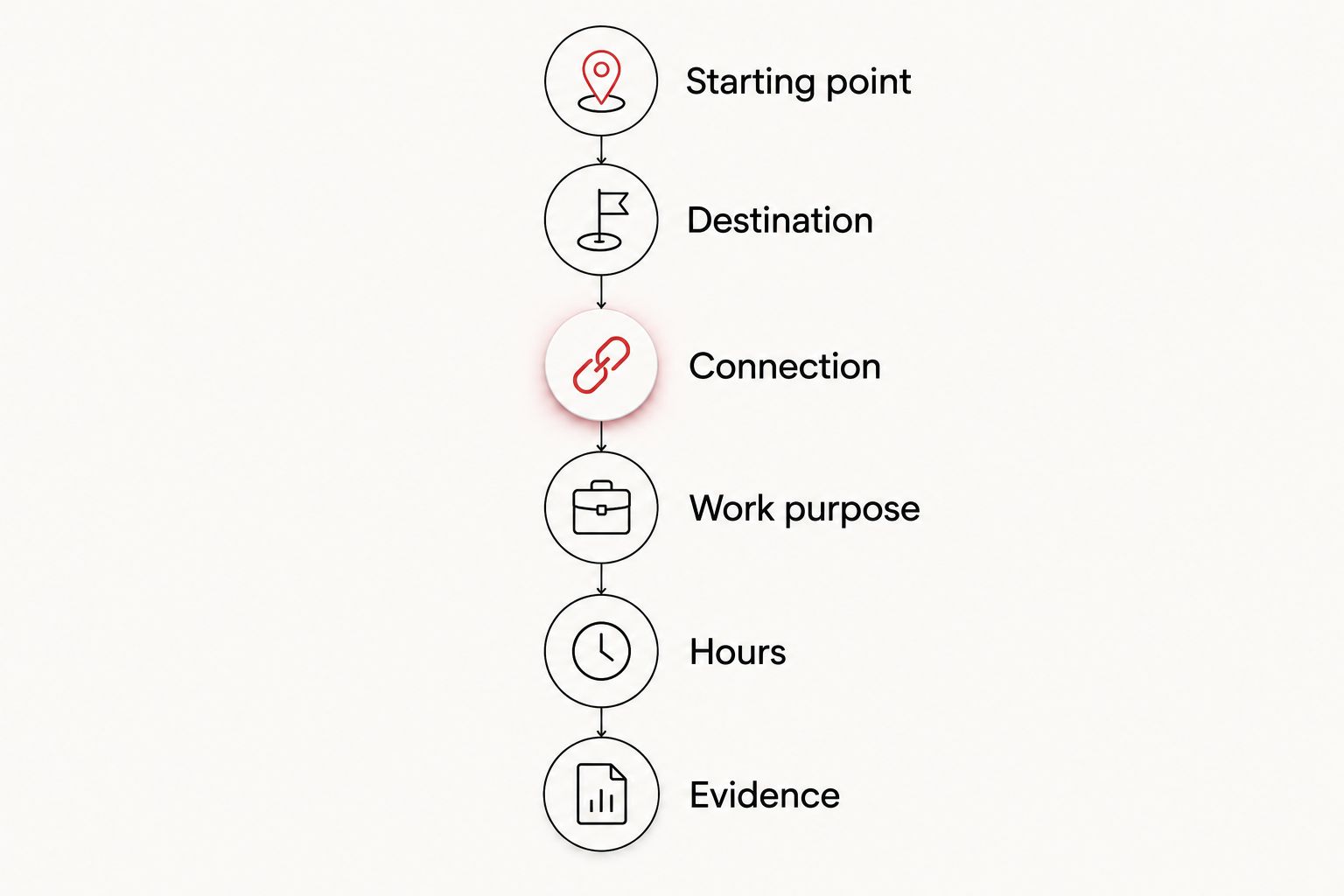
- Name the starting point. Identify your home, depot or other actual departure address. Use the full address in the documents where it is relevant; avoid relying on a suburb name when that leaves the location unclear.
- Name the destination. Identify the workplace, depot or work site. Distinguish your employer's office from the place where you actually perform the work.
- Describe the connection. Set out the ordinary route for a fixed journey. For changing destinations, explain the proposed work area and why a single route does not describe the job.
- State the work purpose. Explain whether the journey gets you to work, takes you between sites or lets you carry out a driving task within the job.
- Match the hours. Check that the route description and requested driving hours describe the same work pattern. Explain travel before a shift and after it, rather than listing shift hours alone.
- Check the evidence. Compare the description with your affidavit, employer information and proposed conditions. Resolve conflicting addresses, destinations or schedules before the documents are finalised.
Read the finished description as if you do not know the job. Can you tell where the driver needs to go and why? If not, replace broad expressions with concrete information.
For example, travelling for work leaves the reader guessing. A description explaining that you travel from your home address to an identified depot, then between assigned job sites within a defined area, gives the request a usable structure. Only include journeys that reflect your real circumstances.
Fixed workplace: describe the commute
For a fixed workplace, identify the home address, workplace address and ordinary journey between them. Explain whether the request covers the return trip as well as travel to work.
Keep the commute separate from driving during work. If you remain at the workplace throughout the shift, do not describe the job as requiring travel between sites. If you leave the workplace for duties, explain those additional journeys separately.
Supporting employment information should match the destination and schedule you describe. An employer letter naming an office does not explain a commute to a different depot without further context.
Best for: drivers whose necessary work travel follows a stable pattern. A specific route makes that pattern easier to describe, but it does not automatically address unexpected closures, changed workplaces or additional duties.
Changing work sites: describe the area and assignments
A job involving changing sites needs more explanation than a fixed commute. Describe where you begin work, how destinations are assigned and the geographical area in which the necessary travel occurs.
Use actual work records to explain the pattern. Relevant material can include job sheets, site addresses or employer information describing where you are sent. Make clear whether an address is a regular destination or an example of the work you undertake.
Avoid asking for an entire region without explaining the connection to your duties. Equally, do not present a single site as your only destination if the job genuinely involves changing locations.
Best for: drivers whose duties involve assigned travel between different sites. An area-based description can explain that work pattern, but the requested boundary still needs a reason. The court decides what conditions to authorise.
Depot and delivery travel: separate the journeys
If your work starts at a depot and then involves driving, distinguish the commute from the driving duties. Getting to the vehicle and using it for work are different parts of the request.
Explain the depot location, the nature of the work journeys and the destinations or area involved. Keep the description consistent with the vehicle and licence matters addressed elsewhere in the application. Route wording alone does not settle whether you are eligible to undertake a particular driving task.
Best for: drivers who need to explain both travel to work and driving within the job. Separating those journeys adds detail, but it prevents a commute-only description from obscuring the actual request.
| Work pattern | What to describe | Practical strength | Main limitation |
|---|---|---|---|
| Fixed workplace | Home, workplace and ordinary connecting route | Makes a stable commute clear | Does not explain additional work journeys |
| Changing sites | Starting location, assignments and defined work area | Explains variable destinations | Needs evidence explaining the boundary |
| Depot and delivery travel | Commute, depot and separate driving duties | Distinguishes getting to work from doing the job | Requires more detail about the work journeys |
Why route descriptions vary
The right description follows your actual work. Do not choose wording because it sounds broader or because another applicant used it.
- Workplace location: a fixed address supports a different description from changing job sites.
- Departure point: starting from home is different from collecting a vehicle or assignment at a depot.
- Driving duties: commuting and driving as part of the job need separate explanations.
- Work schedule: shifts and changing assignments affect how routes connect with requested hours.
- Supporting evidence: employer information, work records and your affidavit should support the same account.
For your 2026 documents, check the whole request together. A precise route with inconsistent hours still leaves an unclear application.
Can you include alternative roads for closures or delays?
Explain a genuine need for alternative roads in the application rather than assuming the proposed wording covers them. Identify the issue and keep any suggested alternative connected to the necessary work journey.
Do not treat a request for alternatives as permission to take them. If conditions are imposed, the authorised wording matters; seek advice when its meaning is unclear.
What if your employer changes your work sites?
Describe the changing-site pattern accurately when preparing the application. Explain how assignments are made and provide relevant information about the area where the work occurs.
A later assignment does not itself change your limited licence conditions. Check the authorised conditions before driving to a new destination and get advice if the journey falls outside them.
Prepare it yourself, use a service or hire a lawyer?
Choose help according to what you need resolved. Organising clear facts is different from obtaining legal advice about eligibility, disputed issues or the scope of a proposed order.
| Option | Best for | Practical benefit | Limit or responsibility |
|---|---|---|---|
| Prepare documents yourself | Drivers able to understand the process and organise their evidence | You control the drafting and supporting material | You must check the process, wording and consistency yourself |
| Document-preparation service | Drivers seeking help assembling their application documents | Turns your information into an organised application bundle | Preparation is not the court's decision or permission to drive |
| Local lawyer | Drivers seeking legal advice about their individual circumstances | Provides advice within the agreed scope of the engagement | Confirm whether document preparation and court attendance are included |
NZ Limited Licence suits drivers who need limited licence document preparation rather than a promise of court approval. The service prepares applications, affidavits and complete bundles nationwide, with fast and careful preparation. You still need to provide accurate facts and supporting information.
When speaking with any provider, explain the route problem first. Say whether you have a fixed commute, changing destinations or driving duties during work. Ask what information is needed to describe that pattern properly.
Get your application documents prepared
Get help preparing your limited licence application, affidavit and complete court document bundle.
Check the wording before the bundle is finalised
Compare the route description with every document that discusses your work. Look for differences in workplace addresses, depot locations, work areas and schedules.
Your affidavit should explain the facts behind the request. Supporting information should substantiate those facts. Proposed conditions should describe the permission being sought, rather than introduce journeys not explained elsewhere.
Use this final check for a 2026 application:
- Can someone unfamiliar with your job identify the necessary destinations?
- Does each requested journey have an explained work purpose?
- Do the requested hours account for the travel described?
- Are examples clearly distinguished from fixed destinations?
- Have you removed personal errands from a work-route explanation?
- Does the evidence support the geographical area you are requesting?
Fix contradictions before polishing the wording. A neatly written description is not useful if it points to the wrong workplace or conflicts with your employer's account.
Official guidance and the court's decision
Use NZ Transport Agency Waka Kotahi's official limited licence guidance for the process and New Zealand Legislation's Land Transport Act 1998 for the statutory requirements. For a 2026 application, check the current versions of both sources.
Section 105 addresses extreme hardship to the applicant or undue hardship to another person, as well as the court's power to impose conditions. Route details help explain the driving permission you seek; they do not replace the hardship case or establish eligibility by themselves.
Keep drafting and authorisation separate. Preparing, filing or discussing an application does not authorise driving. Follow the official process for obtaining the limited licence and comply with its conditions before undertaking any journey.
FAQ
How do I describe limited licence application routes?
Describe the starting point, destination, necessary route or work area, and reason for each work journey. Match the description to your requested hours and supporting evidence.
Do I need to list every road in my limited licence application?
Use enough detail to make the requested journey clear, rather than assuming a road list is always required or always sufficient. Check the proposed wording against current guidance and get advice where the scope is uncertain.
What should I write if my work sites change?
Explain how sites are assigned and identify the work area supported by your actual duties. Use relevant employer information or work records to explain why a single destination does not describe the job.
Can I include the journey home from work?
Describe the necessary return journey explicitly in the permission you request. Do not assume that wording about travel to work also explains the return trip.
Can I use a different route if traffic is bad?
Do not assume a different route is permitted because traffic is bad. Check your limited licence conditions and obtain advice if the authorised scope is unclear.
Can NZ Limited Licence help prepare my route documents?
NZ Limited Licence prepares limited licence applications, affidavits and complete court document bundles nationwide. Accurate route information and supporting work evidence remain essential, and the court decides the application.
Can I drive once my application has been filed?
Filing a limited licence application does not authorise you to drive. Follow the official process for obtaining the limited licence and comply with the conditions before driving.
One last thing
Before finalising your 2026 application, trace a real working day from leaving home to returning. Compare every driving leg with the request you have written.
A home-to-work description can leave out the journeys that happen after arrival. Find those gaps while preparing the documents, not when a new assignment arrives. Describe the work you actually do, then check that the requested permission matches it.