
Yes. A limited licence can affect your car insurance in NZ, but the outcome depends on your insurer, your policy and the suspension or disqualification behind it. For driving in 2026, get written confirmation of cover: permission to drive under a limited licence is not confirmation that your insurer covers that driving.
- Does a limited licence affect car insurance NZ? Yes: ask your insurer to confirm cover for your circumstances.
- A limited licence does not replace your insurer’s approval or change your policy automatically.
- Disclose the suspension or disqualification, licence conditions and actual vehicle use accurately.
- NZ Limited Licence prepares limited licence documents; the court decides the application and the insurer decides cover.
Does a limited licence affect your car insurance in NZ?
A limited licence changes your permission to drive, not the wording of your insurance policy. Your insurer needs to assess your circumstances against the cover it offers. Do not assume an existing policy continues unchanged because you have obtained permission to drive for work.
Start with these separate checks:
| Check | What you need to establish | What it does not establish |
|---|---|---|
| Driving permission | You hold the required licence and comply with its conditions | That your insurer accepts the risk |
| Driver acceptance | Your insurer accepts you as a driver in your circumstances | That every journey is covered |
| Vehicle use | Your policy covers the actual use of the vehicle | That the journey fits your licence conditions |
| Policy conditions | You understand the relevant exclusions and obligations | Permission to drive outside your licence conditions |
Read your policy schedule, wording and any endorsements together. Ask your insurer to explain anything that conflicts with the driving you intend to do.
Why this matters
You need separate answers about driving permission and insurance. Getting the court documents right does not settle the insurance question, and an insurer’s acceptance does not expand your permitted driving.
NZ Limited Licence prepares limited licence applications, affidavits and document bundles. That work supports the court application; it does not bind an insurer or guarantee the court’s decision.
For a 2026 application, make the insurance enquiry while you organise your documents. Finding out that your intended work driving is not covered after arranging a vehicle leaves a practical problem unresolved.
What should you tell your car insurer?
Give the insurer the facts it needs to answer your question. Describe your actual licence status, not just your intention to get a work licence. An application in progress and an issued limited licence are different situations.
Have your suspension or disqualification notice available. Once the relevant documents exist, provide the court order and licence details the insurer requests. Use the wording on those documents rather than relying on memory.
Explain the suspension or disqualification
Tell the insurer what happened, when it took effect and your current driving status. Answer questions about offences, convictions and driving history accurately, including where the insurer asks about events beyond the current application.
Check your policy’s notification requirements now. Do not assume renewal is the right time to report a change, or that an earlier conversation about a claim also updated your driver details.
Explain the proposed driving
Describe who owns the vehicle, who drives it and what you will use it for. Travelling to a workplace, visiting customers and making deliveries are different activities. Ask which description applies under your insurer’s wording.
If your hours or work locations change, say so. A general statement that you need the car for work does not explain the journeys an insurer needs to consider.
Explain the licence conditions
Send the actual conditions when available. Ask whether the insurer needs further information before confirming cover, and whether its answer depends on any conditions being met.
Keep the written response with your policy records. A reference number is useful, but the substance matters more: which driver, vehicle and use has the insurer accepted?
How to check your cover before driving
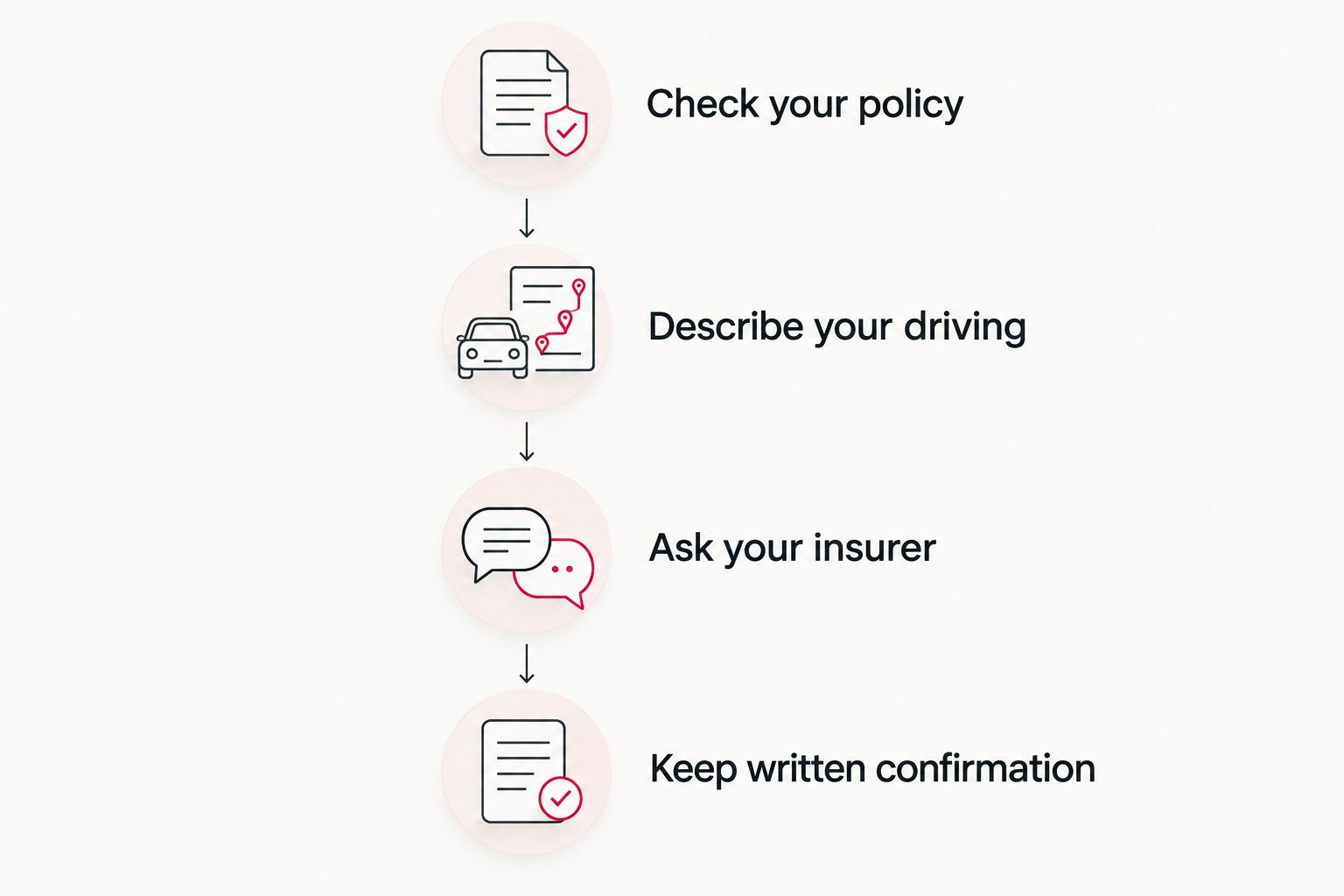
Use this sequence for your 2026 insurance enquiry. Keep the questions specific enough that the insurer can give a usable answer rather than a general explanation of its products.
- Check your policy. Read the schedule, driver details, vehicle-use description, exclusions and notification requirements. Mark anything that mentions licence status, disqualification or changes in circumstances.
- Describe your driving. Set out the vehicle, driver, work tasks and expected journeys. Separate ordinary commuting from driving performed as part of your job.
- Ask your insurer. Explain your current status and provide the documents requested. Ask whether cover continues, needs changing or is unavailable for the proposed arrangement.
- Keep written confirmation. Save the answer and any updated schedule or endorsement. Check that the documents match the arrangement you discussed before relying on them.
Ask for a clear answer about the intended arrangement. A response that the insurer has received your documents is not the same as confirmation that it covers you for the driving described.
If the answer is unclear, ask a follow-up question in writing. Identify the uncertainty directly, such as whether business journeys are included or whether a particular driver has been accepted.
Why the insurance outcome varies
There is no single insurance result attached to the words limited licence. These details need checking against the policy and the insurer’s assessment:
- Licence status: distinguish an application, a court order and the licence needed before driving. Follow NZTA’s instructions for your circumstances.
- Driving history: answer the insurer’s questions about the suspension, disqualification and relevant history accurately.
- Vehicle use: explain commuting, travel between workplaces, customer visits or delivery work as applicable.
- Driver arrangements: identify the main driver and anyone else using the vehicle, including an employee or household member.
- Policy wording: check exclusions, endorsements and duties to notify changes rather than relying on a general description of cover.
- Licence conditions: compare the intended journeys with the conditions that apply to your driving.
These are checks, not a formula for predicting an insurer’s decision. Get an answer for your own policy and circumstances. Another driver’s experience does not establish your cover.
Can you use an employer’s vehicle on a limited licence?
An employer’s permission does not, by itself, confirm insurance cover or permission under your licence. Ask the person responsible for the vehicle policy to check your status with the insurer or broker.
Make sure the enquiry identifies you and the work you actually perform. Being allowed to use a pool car before a disqualification does not answer whether the same arrangement is accepted now.
Keep the employer’s operational permission separate from the insurer’s response. You need clarity about both, particularly where work involves customer visits, carrying goods or changing vehicles.
The guide to using a company vehicle on a limited licence covers the related application checks. Use the actual vehicle arrangement when preparing your documents, rather than a convenient description that does not match your work.
Does a limited licence guarantee an insurance claim will be paid?
No. A limited licence does not guarantee payment of an insurance claim. The insurer considers the policy, the circumstances of the loss and the applicable law.
Driving outside licence conditions or providing inaccurate information creates an issue that needs individual assessment. Avoid blanket statements that every breach automatically defeats every claim, or that a valid limited licence makes every claim payable.
If a claim is declined, ask for the written reasons and the policy terms relied on. Follow the insurer’s complaints process and seek advice about the decision where needed.
What if your insurer will not cover you?
Ask whether the insurer is declining you as a driver, the proposed vehicle use or the policy altogether. Those are different answers. Get the explanation in writing before deciding what to do next.
You can discuss alternatives with another insurer or an insurance broker. Give the same accurate account of your driving history and intended use, and answer questions about previous insurance decisions honestly.
Do not change the description of the main driver or vehicle use simply to obtain acceptance. If the work arrangement genuinely changes, explain the revised facts and obtain a fresh answer before relying on cover.
Prepare the application yourself, use a service or hire a lawyer?
Choose application help according to the work you need done. None of these options replaces asking your insurer about cover, and none can promise that the court will grant your application.
| Option | Best for | Practical advantage | Limitation |
|---|---|---|---|
| Prepare documents yourself | Drivers able to check requirements and organise their evidence | You control the preparation directly | You carry the preparation and checking workload |
| Document-preparation service | Drivers seeking help assembling application documents | Help preparing the application, affidavits and bundle | Preparation is separate from the court’s decision and insurance acceptance |
| Local lawyer | Drivers seeking individual legal advice or representation | Advice about legal issues and representation where arranged | Confirm the scope; document preparation and representation are different services |
NZ Limited Licence is best for drivers seeking limited licence document preparation, rather than insurance advice. The service prepares court-ready applications, affidavits and complete document bundles across all 58 District Courts, with fast, careful preparation.
Tell the preparer about the work driving you actually need. Accurate documents support a clear application; they do not extend the eventual licence conditions or secure an insurer’s acceptance.
Get your application documents prepared
NZ Limited Licence prepares applications, affidavits and document bundles nationwide.
Which official guidance should you check?
For a 2026 application, check NZ Transport Agency Waka Kotahi’s official limited licence guidance for eligibility and the steps required before driving. Use the Ministry of Justice’s official limited licence application guidance for court forms and filing information.
Those sources address different parts of the process. NZTA guidance is not confirmation of insurance cover, and a court application form is not an insurer’s acceptance of you as a driver.
For the insurance question, use your policy documents and a written response from your insurer. Ask the insurer to identify the wording it relies on if its answer is unclear.
Do not drive merely because an application has been prepared or filed. Check that the required licence is in place, understand its conditions and resolve the insurance position for the driving you plan to do.
FAQ
Does a limited licence affect car insurance in NZ?
Yes, a limited licence can affect car insurance in NZ. The outcome depends on the insurer, policy, driving history and intended vehicle use, so obtain written confirmation for your circumstances.
Do I need to tell my insurer about my disqualification?
Check your policy’s notification requirements and tell the insurer about the disqualification when seeking confirmation of cover. Answer its questions accurately rather than assuming you can wait until renewal.
Am I automatically insured once I get a work licence?
No, a work licence does not automatically establish insurance cover. Confirm that the insurer accepts you as a driver and covers the vehicle’s actual use.
Can I drive my employer’s car with a limited licence?
Check both your licence conditions and the employer’s insurance arrangements before driving. The employer’s permission alone does not establish either legal driving permission or insurance cover.
Does my insurer have to accept a limited licence?
Do not assume your insurer will accept your proposed arrangement. Ask for a written decision based on your licence status, driving history, vehicle and intended use.
Will a claim automatically be declined if I breach a licence condition?
A breach does not support a universal answer about every claim. The policy, circumstances and applicable law need assessment; ask for written reasons if a claim is declined.
Can a document-preparation service arrange my car insurance?
Document preparation and insurance acceptance are separate tasks. Ask your insurer or broker about cover, and use the preparation service for the application documents it offers.
One last thing
Before your first permitted trip in 2026, describe that exact journey to yourself: driver, vehicle, purpose and any relevant licence conditions. Then compare it with your insurance confirmation. If the documents describe different arrangements, resolve the mismatch before driving.