
Sales reps’ limited licence applications in New Zealand seek permission for restricted driving, with the aim of keeping essential work possible during a suspension or disqualification. Your evidence needs to explain client visits, sales territory and income at risk—not simply say that your job involves driving.
- Limited licence NZ for sales reps: show why losing driving access creates hardship, using evidence from your actual role.
- NZ Limited Licence prepares limited licence applications, affidavits and document bundles; the court decides whether to grant an order.
- Match requested driving hours and routes to client visits, employer evidence and realistic transport alternatives.
- Choose document preparation for help assembling your application; choose a lawyer when you need legal advice or representation.
Why limited licences matter for sales reps
A sales territory is not the same as a commute. Your working day can involve carrying samples, visiting several customers and travelling between places that public transport does not connect conveniently. Explain which of those demands actually apply to your role.
The strongest starting point is evidence of hardship, not a statement that driving makes work easier. Separate inconvenience from consequences: missed appointments, duties you cannot perform, and income or employment genuinely at risk.
Start with the guide to proving there is no alternative transport. Use it to organise the alternatives you investigated, rather than dismissing every alternative in one sentence.
For a 2026 application, consult NZ Transport Agency Waka Kotahi’s official limited licence guidance and the current Land Transport Act on New Zealand Legislation, particularly section 103. These are the official sources for the legal framework. The distinction matters: the statutory hardship test concerns extreme hardship to you or undue hardship to another person.
A preparation service organises your documents. It does not replace eligibility advice or decide whether that test is met.
How to prepare a sales rep limited licence application
1. Check your licence position before gathering work evidence
Start with the actual suspension notice or court order. Do not work from memory, an employer’s summary or the label ‘drink-driving ban’. The reason you cannot drive affects the questions you need answered before applying.
Check the current NZTA limited licence guidance against your circumstances. Where eligibility, exclusions or timing are unclear, ask a New Zealand lawyer before paying for document preparation. An urgent sales appointment does not resolve an eligibility problem.
Keep your legal position separate from your work argument. A convincing employer letter cannot, by itself, establish that the limited licence process is available to you.
- Licence status: identify whether you face suspension or disqualification.
- Notice details: record the dates and wording on the relevant notice or order.
- Eligibility questions: flag any other licence conditions or orders for legal checking.
- Official guidance: use NZTA and New Zealand Legislation, not an undated forum answer.
2. Describe the sales work you cannot do without driving
Build a factual picture of your role yourself first. Use your job description, diary and actual appointment records. Distinguish travel to a fixed workplace from travel between customers during the working day.
Explain what happens if visits stop. Does another representative cover the territory? Can you handle some accounts remotely? Does your employer have other duties available? Answer honestly, including arrangements that help only part of the time.
Create 1 work schedule that brings the evidence together. For each type of visit, record the destination, purpose, usual timing and materials carried. This is a preparation aid, not a prescribed court form.
- Client visits: identify the kinds of appointments requiring your presence.
- Sales territory: describe the locations you actually service.
- Equipment: list samples or work materials that affect transport choices.
- Employment consequences: explain the duties and earnings at risk, with supporting records.
3. Assemble evidence that supports your hardship explanation
You can gather the documents yourself. Ask your employer for a factual letter explaining your duties, travel needs and available alternatives. If you earn commission, use records that distinguish confirmed earnings from forecasts or hoped-for sales.
Your affidavit should explain the facts in your own circumstances. Supporting documents should back those facts up, not introduce a different version of your working hours or responsibilities. Keep names, dates and role descriptions consistent throughout.
NZ Limited Licence suits sales reps who want their limited licence application documents prepared for court. The service prepares applications, affidavits and complete document bundles nationwide, across all 58 District Courts. Its role is fast, careful document preparation—not a promise of court approval.
- Employer evidence: request specific duties, travel requirements and consequences.
- Income evidence: separate salary, earned commission and estimated future earnings.
- Appointment evidence: use genuine diaries, bookings or visit records.
- Consistency check: compare your affidavit with every supporting attachment.
4. Test transport alternatives against real appointments
Write down what you have checked before concluding that no alternative works. Public transport, lifts, taxis, remote meetings and reassigned visits each deserve a factual answer where relevant. Do not assume the court will infer the difficulty from your job title.
Use 1 representative working day to show the problem clearly. Explain the sequence of appointments, the available travel connections and the materials you need to carry. Label it as an example rather than presenting it as your entire working pattern.
If an alternative works for some duties, say so. Then explain the remaining gap. A precise account is more useful than claiming that every appointment is impossible without your own vehicle.
- Public transport: check connections against actual appointment locations and times.
- Shared travel: ask whether colleagues or household members can realistically help.
- Remote contact: identify which visits can be replaced and which cannot.
- Reassigned work: record what your employer can accommodate and what remains uncovered.
5. Match requested driving to your actual sales duties
Prepare a proposed driving schedule yourself before asking anyone to draft the documents. Start with essential work journeys. Do not copy your entire pre-disqualification driving routine into the request.
For your 2026 application, explain changing appointments without asking for unrestricted travel. Describe the territory, usual work pattern and genuine variations. If your work crosses regions, explain why those journeys belong to your role rather than treating a broad area as self-explanatory.
Identify the vehicle you expect to use and discuss the proposed conditions with whoever prepares or advises on the application. Your preferred schedule is a request, not permission to drive.
- Driving purpose: separate client visits, work travel and private journeys.
- Working hours: support the requested times with your actual duties.
- Travel area: connect each requested area to customers or work responsibilities.
- Vehicle details: gather accurate information about the intended work vehicle.
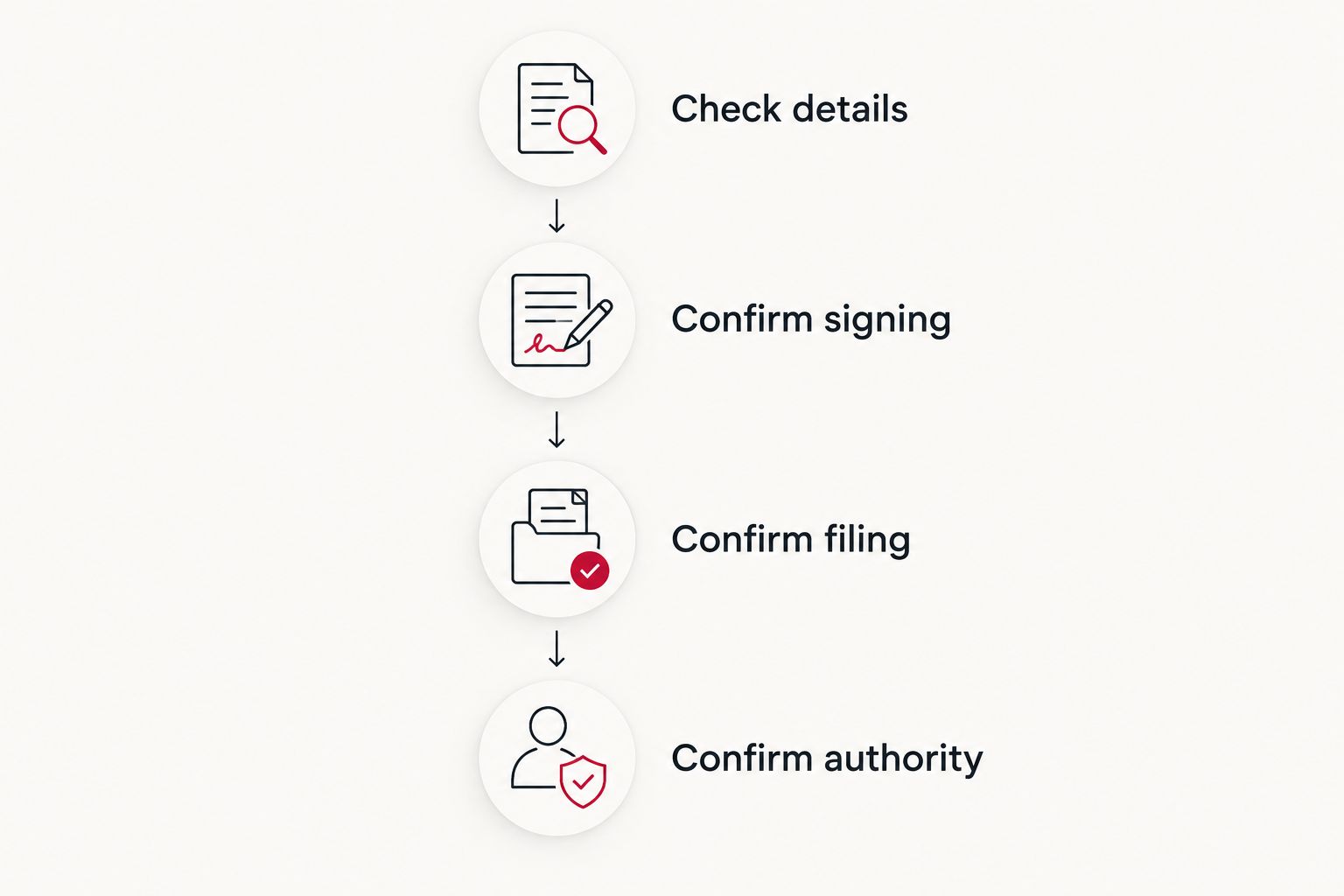
6. Check the bundle and confirm the next procedural steps
Read the complete application before signing anything. Check your name, employer, licence details, dates, requested driving and attachments. Ask for an explanation of any sentence you do not understand or cannot personally confirm.
For a 2026 filing, confirm the current filing, service and affidavit requirements with the relevant District Court registry or your lawyer. The Ministry of Justice’s official guidance on affidavits explains their formal nature and witnessing requirements. Do not assume an ordinary signature completes every document correctly.
NZ Limited Licence prepares the document bundle; the court makes the decision. NZTA’s official limited licence guidance also distinguishes obtaining a court order from obtaining the limited licence. Do not drive on the strength of an application, a booking or an expected outcome.
- Check details: read every document against your original records.
- Confirm signing: establish the correct witnessing process before signing affidavits.
- Confirm filing: check the current procedural requirements for your application.
- Confirm authority: complete the required court and licensing steps before driving.
Compare your application preparation options
Choose the option that matches the help you need. Preparing a straightforward set of facts is a different task from advising on eligibility, answering an objection or representing you in court.
For sales reps preparing in 2026, the practical question is who will turn the employment evidence into accurate documents—and who will answer legal questions if they arise.
| Option | Best for | Main benefit | Key limitation |
|---|---|---|---|
| Prepare documents yourself | Drivers confident checking requirements and writing their own evidence | You control the drafting and supporting records | You must identify requirements, organise the bundle and resolve uncertainties yourself |
| NZ Limited Licence document preparation | Sales reps wanting applications, affidavits and a complete document bundle prepared | Fast, careful preparation focused on the court documents | Document preparation does not decide eligibility or secure court approval |
| Hire a local lawyer | Drivers needing legal advice, representation or help with disputed issues | You can obtain advice about your circumstances and discuss representation | Confirm the scope of drafting, filing and court attendance before instructing the lawyer |
Do not choose solely on how quickly someone can draft. First establish whether you need preparation, legal advice or both. Then confirm who is responsible for each step.
Get your application documents prepared
Court-ready applications, affidavits and complete document bundles for New Zealand drivers.
Common mistakes sales reps make
Treating a large territory as proof of hardship
A territory description establishes where you work, not what happens when you cannot drive. Connect the area to actual visits and explain the employment or income consequences of leaving those visits uncovered.
Presenting forecast commission as lost income
A sales target is not the same as established earnings. Label forecasts clearly and support your account with relevant earnings records, the commission arrangement and evidence of the duties affected.
Asking for driving that exceeds the evidence
A request covering every evening and weekend needs an explanation tied to work. Keep private convenience out of the work schedule, and identify genuine after-hours duties separately from ordinary client contact by phone.
Using an employer letter that only says driving is essential
A short endorsement leaves the practical questions unanswered. Ask your employer to explain visits, territory, alternative duties and the consequences of losing your driving contribution. The facts matter more than emphatic wording.
FAQ
Can a sales rep get a limited licence in New Zealand?
A sales rep can apply where the limited licence process is legally available to them; the job title alone does not establish eligibility. Check NZTA’s current guidance and obtain legal advice where your suspension, disqualification or other orders raise questions.
What evidence should a sales rep prepare for a limited licence application?
Prepare evidence of your duties, client travel, employment or income consequences, and transport alternatives. Employer evidence, appointment records and relevant earnings records should support a consistent account in your affidavit.
Can my limited licence cover a whole sales territory?
Do not assume a limited licence will cover your whole sales territory. Explain the work journeys you seek permission for, support the area with evidence and check the actual conditions imposed before driving.
What if my sales appointments change every week?
Explain the changing pattern with genuine appointment records and employer evidence. Distinguish your normal territory and working hours from occasional exceptions so the requested driving is understandable.
Do I need a lawyer or a document-preparation service?
Choose a document-preparation service when you need help preparing the application bundle, and a lawyer when you need legal advice or representation. Confirm each provider’s scope rather than assuming document preparation includes every procedural or legal task.
Can I drive once my limited licence documents are ready?
No. Prepared documents are not permission to drive. NZTA’s official guidance explains the court-order and licensing steps; complete the applicable requirements and follow the resulting licence conditions.
What should a self-employed sales rep use instead of an employer letter?
Use records that explain your own work, travel and income, such as client bookings, contracts and relevant business records. Distinguish your personal hardship from unsupported claims about future business losses, and obtain advice on the evidence your circumstances require.
One last thing
Before submitting your 2026 application, compare the requested driving with your next ordinary working week. Can you explain every journey by reference to a duty, appointment or supporting record?
Remove assumptions before adding paperwork. A clear explanation of why essential visits cannot be covered another way is more useful than a large bundle that never answers that question.